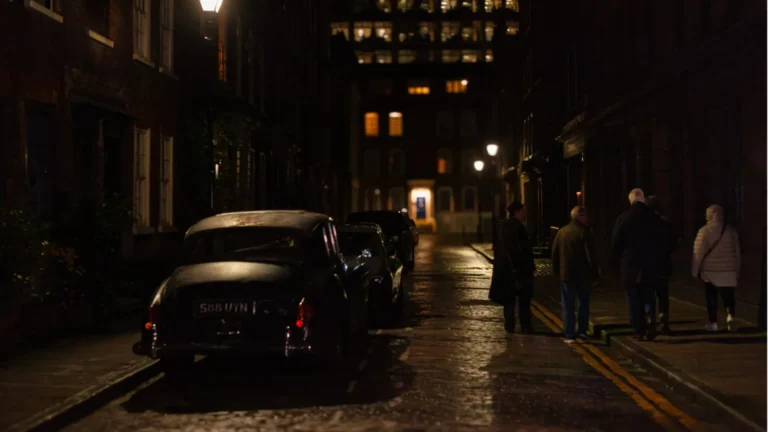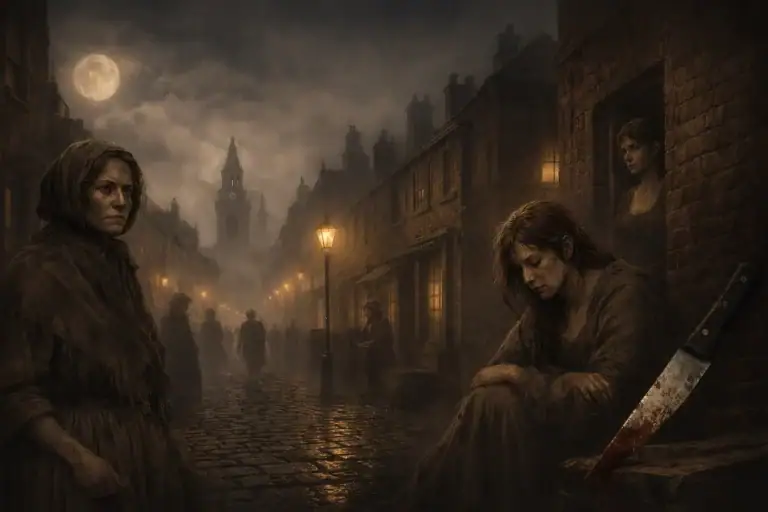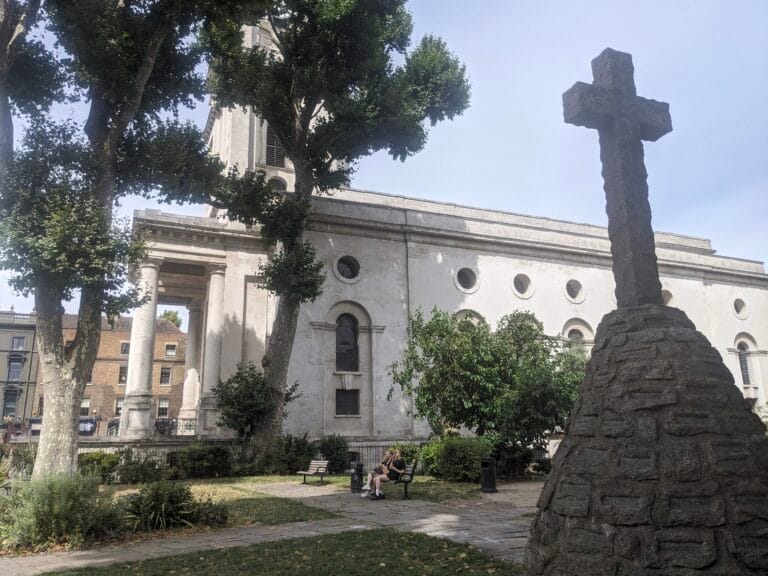
London, 1888. A city of two halves. While the West End sparkled with the opulence of the Victorian elite, the East End: specifically the labyrinthine streets of Whitechapel: was a descent into a different world entirely. It was a place of shadows, secrets, and a sudden, visceral terror that changed the face of London history forever.
We’ve all heard the name: Jack the Ripper. But behind the sensationalist headlines and the century of cinematic reimagining lies a cold, hard mystery that remains unsolved to this day. For over 135 years, historians, armchair detectives, and “Ripperologists” have pored over police files, witness statements, and yellowed newspaper clippings to answer one burning question: Who was he?
At Fun London Tours, we believe history isn’t just something you read in a book; it’s something you walk through. When we traverse the cobblestones of Whitechapel together, we don’t just tell you a story: we invite you to weigh the evidence, examine the motives, and step into the shoes of the Victorian investigators who were tasked with catching a ghost.
Let’s unearth the files on the top suspects in London’s greatest mystery.
Before we dive into the “who,” we must understand the “where.” The Whitechapel of 1888 was a pressure cooker of poverty, overcrowding, and social unrest. Thousands lived in “doss houses,” sharing beds with strangers in conditions that were cramped, filthy, and desperate.
The “Autumn of Terror” officially claimed the lives of five women: Mary Ann Nichols, Annie Chapman, Elizabeth Stride, Catherine Eddowes, and Mary Jane Kelly: known as the “Canonical Five.” The sheer brutality of the crimes, combined with the Ripper’s ability to vanish into the thick London fog, created a media frenzy like nothing the world had seen before.

Perhaps the most enduring name in the Ripper files is Montague John Druitt. A barrister and a schoolmaster, Druitt was a man of “good family” and education: hardly the image of a slum-dwelling monster.
So why was he a suspect? Shortly after the final murder of Mary Jane Kelly in November 1888, Druitt disappeared. Seven weeks later, his body was found floating in the River Thames. His pockets were filled with stones, suggesting a tragic end by suicide.
Sir Melville Macnaghten, a top official at Scotland Yard, famously noted that Druitt was “sexually insane” and that his family suspected him of being the killer. Was he a man driven to madness by his own dark deeds, or simply a victim of his own personal demons? On our London walking tours, we discuss whether a man of his social standing could have navigated the treacherous back alleys of the East End so effortlessly.
Recent years have brought a new name to the forefront of the investigation: Hyam Hyams. Through the dedicated research of Sarah Bax Horton: the great-great-granddaughter of a police officer involved in the original case: Hyams has emerged as a startlingly plausible candidate.
Hyams was a local cigar-maker who suffered from epilepsy and severe alcoholism. What makes him particularly interesting is how closely he matches contemporary witness descriptions. Witnesses often spoke of a man with a “stiff arm,” an “irregular gait,” and “bent knees.” Hyams fit this profile perfectly due to previous injuries.
Furthermore, his mental health was in a state of rapid decline. He had a history of violent outbursts, once attacking his wife with a “chopper.” Crucially, he was committed to a mental asylum in September 1889, shortly after the murders ceased. It’s a compelling piece of the puzzle that we often dissect while standing in the very spots where these events unfolded.

If you’re looking for a suspect who was undeniably a killer, look no further than Severin Klosowski, better known as George Chapman. A Polish immigrant who arrived in London just before the murders began, Klosowski was later hanged: not for the Ripper crimes, but for poisoning three of his wives.
Inspector Frederick Abberline, the lead detective on the Ripper case, was reportedly convinced that Klosowski was his man. Klosowski had some medical training, which might explain the anatomical precision found in the Ripper’s crimes. However, criminologists often argue that “signature” killers rarely change their method of execution: moving from the visceral violence of the Ripper to the slow, calculated method of poisoning is a leap many find hard to believe.
The name “David Cohen” might sound common, but in the context of the Ripper investigation, it represents a specific type of suspect. Renowned Ripperologist Martin Fido suggested that “David Cohen” was actually a placeholder name used by an asylum for an unidentified, violently insane Polish Jew who was picked up in Whitechapel.
Fido’s theory suggests that this individual: possibly Nathan Kaminsky: was the true killer. The theory hinges on the idea that the police knew more than they let on and that the end of the murders perfectly coincided with this man’s permanent incarceration. It’s a theory that highlights the grit, tragedy, and chaos of the era.

Why are we still talking about this over a century later? Is it the Victorian aesthetic of top hats and gaslights? Is it the sheer incompetence or perhaps the brilliance of the early Metropolitan Police?
We believe it’s because the Jack the Ripper case is the ultimate “whodunnit.” It’s a story of grit, mystery, and resilience. Every time a new piece of evidence comes to light, or a new suspect is unearthed, the world leans in a little closer. The case serves as a window into a London that no longer exists, yet whose echoes can still be felt in the narrow passages and ancient pubs of the East End.
The beauty of history is that it’s never truly finished. New theories emerge, old files are digitized, and the conversation continues.
When you join us on a tour, you’re not just a spectator… when you’re being led around whitechapel with one of our tour guides, you feel like you’re part of the investigation. We’ll show you where the bodies were found, explain the police blunders, and introduce you to the suspects who haunt the history of this great city.
We don’t just want to tell you who Jack was; we want to explore the mystery together. Was it the barrister with a dark secret? The local tradesman with a physical limp? Or someone whose name has been lost to time entirely?

London is a city built on layers of stories. From the heights of the Royal Family to the depths of the Whitechapel slums, every corner has a secret waiting to be told. The Ripper mystery is just one thread in the vast tapestry of London history.
If you’ve ever felt the pull of a good mystery, or if you find yourself captivated by the “what ifs” of the past, we invite you to come and see it for yourself. Our tours are designed to be friendly, engaging, and deeply informative: leaving you with plenty to discuss over a pint in a historic pub afterward. And if you fancy digging deeper, our expert guides like Judd and Emily are always ready to share their insights… you can meet the team right here: https://funlondontours.com/meet-the-team/
Curious to learn more about the different facets of our tours? You can always check out our FAQ page or browse through our tour categories to find the perfect adventure for your next visit.
Until then, keep your eyes open and your curiosity sharp. The streets of London are waiting… and they have many more stories to share.
The year is 1888. A thick, yellow fog: the infamous “pea-souper”: clings to the brickwork of Whitechapel. The air is heavy with the scent of coal smoke, river mud, and the copper tang of blood. In the heart of London’s East End, a series of brutal crimes is unfolding, leaving the most sophisticated police force in the world baffled, frustrated, and under fire from a terrified public.
When we talk about Jack the Ripper today, we often drift into the realm of ghost stories and urban legends. But for the men of the Metropolitan Police and the City of London Police, this wasn’t a legend. it was a grueling, high-stakes investigation played out under the glare of the world’s first global media circus. It was a cold case that would change the face of Victorian London forever.
At Fun London Tours, we believe that to truly understand the mystery, you have to do more than just listen to the stories; you have to step into the boots of the investigators. We invite you to join us as we unearth the clues, examine the failures, and explore the dark corners where history and mystery collide…
To understand the Jack the Ripper investigation, one must first understand the environment. Victorian Whitechapel was a tangled web of narrow alleys, overcrowded rookeries, and dimly lit courts. It was a place of grit, grime, and desperation. For a killer, it was the perfect hunting ground; for a detective, it was a logistical nightmare.
The sheer density of the population meant that thousands of people were packed into a tiny geographical area. Anonymity was easy to find, and a man could vanish into a doorway and be gone in seconds. As we wander through these same streets on our walking tours, we can still feel the claustrophobia of the old East End.
The investigation was hampered from the start by this geography. How do you find one man in a sea of eighty thousand?

In the autumn of 1888, the task of catching the killer fell to some of the finest minds in Scotland Yard. Chief among them was Inspector Frederick George Abberline. He wasn’t some high-society official looking down from an ivory tower; he was a man of the people. Having spent fourteen years patrolling Whitechapel before his promotion, Abberline knew the public houses, the lodging houses, and the criminal underworld better than anyone.
His local knowledge was the police’s greatest asset. He understood the rhythm of the streets, the slang of the locals, and the hiding spots of the desperate. Alongside him was Chief Inspector Donald Swanson, the man tasked with coordinating the massive influx of information at Scotland Yard. While Abberline was the boots on the ground, Swanson was the brain in the office, meticulously filing reports and trying to find a pattern in the chaos.
Then there was Detective Inspector Edmund Reid, the head of the Whitechapel Division CID. These men were dedicated, hardworking, and deeply frustrated. They weren’t just fighting a killer; they were fighting a lack of resources, a sensationalist press, and a public that was beginning to lose faith in the “Bluebottles.”
One of the most fascinating aspects of this Victorian cold case is considering what the detectives didn’t have. Today, we take DNA profiling, fingerprinting, and CCTV for granted. In 1888, these concepts were the stuff of science fiction.
The investigation relied entirely on shoe leather, interviews, and intuition. The police interviewed over 2,000 people and formally investigated more than 300 suspects. They visited 76 butchers and slaughterers, checking the alibis of every employee. It was a monumental effort of manual labor. Without forensic science, the detectives were forced to look for “the man with the blood-stained apron,” a search that led them into a maze of false leads and “Leather Apron” scares.

Because of the anatomical precision of the crimes, the police focused heavily on those with medical or surgical knowledge. This narrowed the field, but also opened up a world of terrifying possibilities. Was the killer a doctor gone mad? A butcher with a dark obsession? A high-society gentleman “slumming it” in the East End?
We explore these theories in depth, looking at the evidence against men like Montague John Druitt, Severin Klosowski (George Chapman), and Aaron Kosminski. Each name brings a new layer of mystery to the investigation. Was the killer a local who blended into the crowd, or a stranger who arrived by night? The police were torn between searching for a common criminal and a “man of means.”
As we dig deeper into the files, we see how the investigation was often led astray by the prejudices of the time. The search for the “foreign-looking man” or the “gentleman in the top hat” often revealed more about Victorian anxieties than it did about the killer himself.
It wasn’t just the killer that the police were struggling with. The internal politics of the Metropolitan Police were, frankly, a bit of a mess. At the height of the “Double Event”: the night when two women were killed within an hour: the head of the CID, Assistant Commissioner Robert Anderson, was actually on holiday in Switzerland.
Imagine the chaos! While the most famous serial killer in history was active, the man supposed to be leading the hunt was taking the mountain air. This left a vacuum of leadership that Sir Charles Warren, the Commissioner, struggled to fill. The lack of coordination between the Metropolitan Police and the City of London Police (who had their own jurisdiction) led to lost clues and overlapping efforts. It was a classic case of the left hand not knowing what the right hand was doing.

One of the reasons the Jack the Ripper case remains a “cold case” is that much of the primary evidence has been lost to time: and to war. During the London Blitz of World War II, a significant portion of the City of London Police files relating to the 1888 murders was destroyed in the fires.
What remains are fragments: a few letters, some grainy photographs, and the handwritten notes of detectives like Abberline and Swanson. These remnants are the puzzle pieces we use to reconstruct the investigation. When you join us on a tour, our guides: experts like Judd and Emily: help you sift through these fragments to see what the police saw, and perhaps, to see what they missed.
The Jack the Ripper investigation remains the ultimate “Whodunnit.” It is a story of failure, certainly, but also a story of a city on the brink of change. The murders forced the Victorian authorities to look at the poverty and suffering in the East End, leading to social reforms that would eventually transform the area.
But beyond the social history, there is the hunt. The mystery, the suspects, and the investigation continue to captivate us because they represent the birth of modern criminal profiling. We are still trying to solve the puzzle that Abberline and his men couldn’t.

Are you ready to step into the fog? Do you have the intuition, the logic, and the curiosity to look at the evidence with fresh eyes?
Our Jack the Ripper tours aren’t just about the darkness; they are about the search for light.
We don’t just tell you what happened; we show you where it happened, why it happened, and how the police tried to stop it. We dive into the dossiers, weigh the suspects, and immerse ourselves in the atmosphere of 1888.
Whether you are a seasoned “Ripperologist” or a curious newcomer to London’s history, we invite you to be part of our next expedition. Our guides, such as Judd or Alex G or Alex B, are waiting to share the secrets of the Whitechapel files with you.
There is always more to discover in the shadows of the East End… and the next clue might be just around the corner. Check out our blog for more deep dives into London’s hidden history, or book your spot on a tour today. The case is still open, and the streets are waiting.
For over a century, the name “Jack the Ripper” has echoed through the streets of London, conjuring images of a top-hatted figure disappearing into the swirling Victorian fog. It is a tale told in whispers, a narrative dominated by the hunt for a monster, the analysis of clues, and the endless debate over suspects. But in the shadow of this legend, the true heart of the story has often been obscured.
At Fun London Tours, we believe history is at its most potent when it focuses on humanity. To truly understand the Autumn of Terror in 1888, you must look past the silhouette of the killer and into the lives of the five women whose journeys ended so tragically in the East End. These were not mere “victims” or static figures on a police report; they were women of grit, struggle, and resilience.
By exploring Whitechapel history through their eyes, we unearth a world that is far more complex than any ghost story. It is a story of Victorian London that demands to be heard…
To walk the streets of Whitechapel today is to trace a place where much of its historic character still clings on, and where the past never feels too far away.
In 1888, this was a place of extreme contrasts. While the West End sparkled with the wealth of the British Empire, the East End was a labyrinth of overcrowded tenements, flickering gaslight, and desperate poverty.
Life here was a relentless cycle of survival. Imagine the sensory overload: the pungent scent of the tanneries, the roar of the markets, and the crushing intensity of thousands of souls packed into narrow courts. For the women we remember today: Polly, Annie, Elizabeth, Catherine, and Mary Jane: the struggle wasn’t just against a shadowy figure in the night, but against a society that offered them very little in the way of safety or support.
When you join one of our London walking tours, we don’t just show you the locations; we help you inhabit the atmosphere of the time. We look at the “doss houses” where a bed cost fourpence and the casual wards of the workhouses that stood as the final, grim safety net for the displaced.

The story often begins with Mary Ann Nichols, known to her friends as Polly. Too often, history dismisses her as a stereotype of the “fallen woman.” But when we dig deeper, we find a mother who had once lived a settled, domestic life. Polly was a woman of spirit who faced the breakdown of her marriage and the loss of her children with a quiet, devastating endurance.
She moved through the capital from the relative luxury of new build housing in Southwark to the harsh reality of the East End. Her story is one of a woman trying to find her feet in a world that kept pulling the rug out from under her. When we talk about Polly, we don’t focus on the crime. Instead, we reflect on the daughter, the wife, and the mother who was simply trying to navigate a city that offered no easy exits.
Annie Chapman was known for her cleverness, her market-trading skills, and her tenacity. She was a woman who had experienced the comforts of a middle-class life: complete with a husband who was a coachman and children she dearly loved: before the twin shadows of illness and alcohol began to unravel her world.
Annie wasn’t a nameless face in the crowd. She was a woman who sold crochet work and matches, a woman who possessed a “sharp tongue” and a quick wit. In the yards of Hanbury Street, we remember Annie not for how she died, but for how she lived: with a determination to keep going, even when the odds were stacked against her.

The “Double Event” of September 30th remains one of the most discussed nights in Whitechapel history, but for us, it is a night to honour two distinct and fascinating lives.
Elizabeth Stride, or “Long Liz,” was a Swedish immigrant who had crossed the North Sea with dreams of a new life. She was a woman who had run a coffee house, and someone who constantly reinvented herself in the face of tragedy. Her life was a testament to the immigrant experience in London: a story of hope, loss, and the search for belonging.
Just a short walk away, Catherine Eddowes was a spirited wanderer. She was a woman who loved to sing, a mother who had travelled the country selling ballads and chapbooks. Kate was known for her intelligence and her fierce independence. She had only recently returned to London from the hop-picking fields of Kent, her pockets filled with the meager earnings of a hard summer’s work. When we explore the area tied to her story, we invite you to hear the echoes of her songs rather than the silence of the night.
Finally, there is Mary Jane Kelly. The youngest of the five, her life is shrouded in more mystery than the others, yet her presence in the narrative is perhaps the most poignant. She was a woman of “considerable beauty” and talent, a person who had seen different worlds: from the coal mines of Wales to the streets of Paris.
Her story represents the vulnerability of youth in the Victorian city. In the cramped quarters of Miller’s Court, we don’t dwell on the horror, but on the tragic loss of potential. What could Mary Jane have become in a society that valued her safety as much as its own progress?

It is easy to get lost in the “whodunnit” of Jack the Ripper. The suspects are numerous, the theories are endless, and the mystery is undeniably compelling. However, focusing solely on the killer can sometimes feel like a second injustice to the women. By centering our Jack the Ripper experience on the victims, we provide a more honest, more emotional, and ultimately more respectful look at the past.
When we walk these streets together, we are not just tourists; we are witnesses. We look at the social structures of 1888: the lack of healthcare, the gender inequality, and the housing crisis: and we see the parallels that still resonate today. This isn’t just a history lesson; it’s a connection across time.
At Fun London Tours, our mission is to provide experiences that are as thoughtful as they are engaging. We believe that a tour should leave you with more than just facts; it should leave you with a feeling. Our guides are experts in weaving together the threads of Whitechapel history, ensuring that the personalities of these five women shine through the darkness of their legend.
That’s where guides like Judd and Emily really come into their own. They don’t just recite dates and street names — they unearth the human stories, build the tension, and bring the past to life with warmth, humour, and heart. If you’d like a peek behind the curtain, head to our Meet the Team page where we talk more about our storytelling style.
If you are looking for a way to experience London that goes beyond the surface-level thrills, we invite you to walk with us. Let us show you the London that the history books often overlook. Let us introduce you to Polly, Annie, Elizabeth, Catherine, and Mary Jane.
Exploring the East End is a journey of colour, mystery, and magnificence. It is a chance to see the city in a new light, to understand the struggles of those who came before us, and to honour the lives that were lived in the shadows.
Are you ready to discover the true heart of Whitechapel? You can browse our full range of experiences and find the perfect path through the city’s past by visiting our Jack the Ripper tour page or checking out our latest updates on the Fun London Tours blog.
The streets are waiting… and the stories are ready to be told.

There is a profound beauty in remembering. By choosing to learn about these women, you are ensuring that their names are not forgotten. We would love to be your companions on this journey of discovery. Whether you are a local history buff or a first-time visitor to our city, there is always something new to unearth in the winding alleys of London.
To see more of what we do and meet the team behind the tours, feel free to watch our introductory video or dive into our FAQ section to plan your visit.
Let’s be honest for a second. When you hear the name “Jack the Ripper,” your mind probably jumps straight to a top hat, a swirling black cape, and a foggy London alleyway. It’s the ultimate Victorian ghost story, isn’t it? For decades, the industry of “Ripperology” has obsessed over the man in the shadows, turning a series of tragic murders into a macabre game of Cluedo.
But at Fun London Tours, we’ve always felt that something was missing from that narrative.
So here’s our approach. Our Jack the Ripper Walking Tour: Murder, Mystery, & the Women of Whitechapel is deliberately balanced. We dig into the suspects, the police investigation, and the eerie atmosphere of Whitechapel… just as much as we explore the lives of the women most affected by 1888.
We still unearth the stories buried under a century of sensationalism. We still refuse the “gore-porn” angle. But we also don’t dodge the bigger puzzle. We explore the full mystery: who might have done it, how the investigation unfolded, and why the East End became the perfect place for a killer to disappear.
If you’ve ever walked through the East End, you know it’s a place of layers. It is a district of colour, mystery, and magnificence, where modern glass skyscrapers loom over medieval street patterns. But in 1888, Whitechapel was a very different beast. It was a place of extreme poverty, overcrowding, and a desperate struggle for survival.

Most London walking tours covering this era tip hard in one direction: either it’s all suspects and “gotcha” theories, or it’s all shock and spectacle. We do something more grounded. We weave together the leading suspects, the twists and blind spots of the police investigation, and the lived reality of Whitechapel… while making sure the women aren’t reduced to footnotes.
Because when we focus only on the killer, the victims become plot points. And when we focus only on the headlines, we miss the wider mystery of how a whole district: its poverty, policing, press, and prejudice: shaped what happened next. Our Jack the Ripper Walking Tour: Murder, Mystery, & the Women of Whitechapel explores the full case with a uniquely respectful lens.
To understand the Whitechapel history of 1888, you have to understand both the place and the people in it. That means the women who lived through it, yes… but also the investigation that struggled to keep up, and the suspect theories that still spark debate today.
These weren’t just “prostitutes”: a label often used by Victorian police and modern storytellers to dismiss their importance. These were mothers, sisters, daughters, and wives. They were women who had fallen on hard times in a society that offered no safety net.
Take Mary Ann “Polly” Nichols, for example. She wasn’t just a victim; she was a woman who had tried to build a life despite the crushing weight of poverty and a failed marriage. Or Annie Chapman, a woman of intelligence who suffered the heartbreaking loss of her children before being forced onto the streets.
Then there’s Elizabeth Stride, a Swedish immigrant who sought a new beginning in London, and Catherine Eddowes, a woman known for her spirit and her beautiful singing voice. Finally, there is Mary Jane Kelly, the youngest of the five, who possessed a fierce independence that allowed her to rent her own room: a rarity in the slums of Spitalfields.
When you join us on the streets of the East End, we don’t just point at a dark corner and talk about a murder. We talk about the resilience, the struggle, and the survival of these women. We want you to see them as people, not just statistics or silhouettes in a history book.
One of the real hidden gems London offers is its ability to act as a time machine. As we wander through the winding backstreets, our expert guides will help you visualize the “Abyss” that was Victorian Whitechapel.

We dive deep into the social history of the time. Why was the East End so volatile? Why was the police force so ill-equipped to handle the investigation? By examining the environment: the overcrowded doss houses, the gin palaces, and the workhouses: we paint a vivid picture of a world where life was cheap, but the human spirit was incredibly tough.
And from there, we zoom in on the case itself. What did the police actually know at the time? What were they getting right, what did they miss, and how did the press whip the story into a frenzy? This context is vital. It explains why the “Ripper” was able to vanish into the night, and why the Jack the Ripper suspects list grew to include everyone from local madmen to members of the social elite… while the women at the centre of it all were too often flattened into a single stereotype.
We know there are a lot of Jack the Ripper tours out there. Some involve guides dressed in costumes, others use “Ripper-Vision” projectors to show crime scene photos on the walls. We take a different path.
We believe the history is powerful enough on its own. It doesn’t need capes, jump-scares, or lurid theatrics to keep you hooked. We can explore the full mystery: suspects, investigation, and Whitechapel’s atmosphere: while keeping the storytelling human, thoughtful, and respectful. And it helps that you’ll be in brilliant hands with guides like Judd and Emily (meet them on our Meet the Team page)… Our approach is built on three core pillars:

The identity of the killer is a puzzle that has remained unsolved for over 135 years. And yes: we treat that mystery with real care and real curiosity. On our tour, we discuss the leading theories and the evidence (or lack thereof) against various Jack the Ripper suspects.
We also dig into the investigation itself: the competing jurisdictions, the limitations of Victorian policing, the pressure from above, and the role of the press in shaping what people thought they “knew”. We look at the letters sent to the Central News Agency, the missteps and dead ends, and the myth-making that helped “create” the legend of Jack.
But we never let the mystery swallow the humans. We always bring it back to the ground… back to the streets, the lives, and the wider Whitechapel story that made 1888 feel so combustible.
London is a city of secrets, and Whitechapel is perhaps its most secretive corner. Whether you are a lifelong Londoner or a first-time visitor, exploring this area with a fresh perspective is a rewarding experience. It’s about more than just a “true crime” story; it’s about connecting with the human history of our city.

If you’re curious about our other explorations of the city’s quieter corners, you might enjoy our Secret Old London Tour or our Hidden London Walking Tour. We love finding those stories that traditional guidebooks tend to skip over.
Are you ready to see a different side of the Ripper legend? To move past the clichéd shadows and discover the real people of the Victorian East End?
We invite you to walk with us. Let’s explore the alleyways, unearth the social history, and pay our respects to the women of Whitechapel. It’s a journey through Whitechapel history that is as thought-provoking as it is atmospheric.

Space on our small-group tours fills up quickly, especially as the evenings draw in and the atmosphere of the East End truly comes alive. We would love to have you join us for an evening of mystery, history, and discovery.
Let’s solve the real mystery together: not just who the killer was, but who these women truly were. We’ll see you in the East End…