The Wild History of Whitecross Street

Today many of you may know Whitecross Street for its vibrant international food market which is super popular with the local workers during the week and also for its annual street art festival which takes place every July.

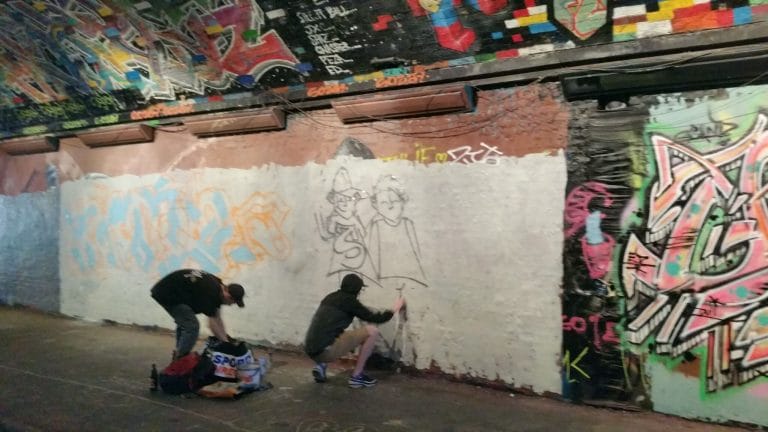
That event is one of the few opportunities where street artists can paint on the walls without fear of recrimination, and along the street you’ll find the likes of Conor Harrington, Urban Solid, Paul ‘Don’ Smith and DS Solid have left their mark.

Further works now adorn the side of the Peabody Housing Estate, and they certainly bring a splash of colour and imagination to the area, and walking along Whitecross Street feels like you are passing through an outdoor art gallery.

Check out these works by Otto Schade, Boxhead, Inkie, Zadok, Airborne Mark, Nathan Bowen

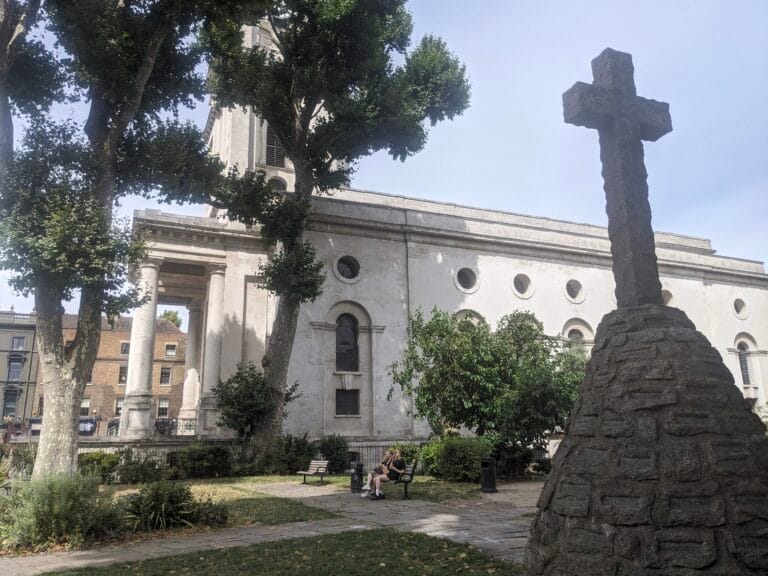
Moving back in time, it may not surprise you to know that this street was named after a stone white cross which once stood here as early as the 15th century. White stone crosses often represented the jurisdiction of the Knights Hospitallers – a wealthy religious order at the time – with the four arms representing the four virtues of prudence, temperance, fortitude and justice.

At one point the Hospitallers controlled Malta, and the Maltese Cross owes its history to the religious order, hence the similarity. Incidentally, if you are keen to delve into the order’s fascinating history, you can visit the Museum of the Order of St John in nearby Clerkenwell (below image).

Peeling back the veneer of modern hipster morality, this street’s history paints a picture of a place which has struggled to live up to those four Christian virtues!

A 17th century ballad went like this: ‘In Whitecross Street and Golden Lane do strapping lasses dwell, and so do there in every street, twixt that and Clerkenwell’

One such strapping lass was the notorious Priss Fotheringham who in around 1660, after a career of working in brothels, set herself up as the madam of the The Six Windmills tavern on the corner of Whitecross Street and Old Street.

Shutter Art on Whitecross Street

During her younger years, she was described as ‘the second best whore in the city’, and gained great fame from her skill at the ancient art of ‘chucking’, where she would stand on her head, naked, and customers would throw coins into what at the time was known as her ‘commodity’. Not surprisingly this form of entertainment proved spectacularly popular, and the tavern became known as the ‘half crown chuck office’.

The 17th century also saw the street develop as one of London’s foremost Sunday markets. Being just outside the walls of the City of London, it thrived despite many God-fearing folk considering having a market on the Sabbath to be ‘vulgar’. It attracted working class people known as costermongers’ which translated into modern language means apple seller.

Over time, almost certainly to protect themselves from the law, they developed a secret language whereby they spoke words backwards – ‘boy’ became ‘yob’, table – ‘elbat’, and ‘penny’ – ‘yennap’. Alongside this they also developed a language we still know of today, called rhyming slang, which included phrases like ‘rubbedy dub’ for pub, and ‘trouble and strife’ for wife!

By the 19th century, following an article written by one of the first investigative undercover journalist James Greenwood which shocked the readership, Whitecross market became associated with poverty and alcohol, and was known as the ‘squalors market’.

So perhaps it could be argued that with so much law breaking and raucousness, Whitecross Street could be seen as an ideal place for a jail… In 1813 a debtor’s prison was built here to house up to 500 inmates and ease crowding in Newgate Prison in the City of London.  But given that at this time you could be imprisoned for stealing a shilling or a sixpence, it is estimated that over 2000 people passed through these doors each year, and once incarcerated it was notoriously difficult to get out.

Newgate Prison

Fortunately once a year according to the 17th century Will of Nell Gwynne, prostitute turned favoured mistress of King Charles II, a sum of £20 was given to inmates of the prison to release them from jail on Christmas Day. By 1869 it was no longer possible to imprison people for debt, and the following year the jail closed down.

Today Whitecross Street really feels like a sanitised shadow of its former wild days, with even the anti establishment ethos of street art now here being challenged by being officially sanctioned and controlled by Islington Council. So maybe the four virtues of the ancient white cross are finally being fulfilled!

With thanks to Clerkenwell & Islington Guiding Association and the English Hedonists for providing the inspiration to write this article. 

The Two Queens of Fleet Street

Walk along the busy ‘street of ink’ from the Royal Courts of Justice towards St Paul’s Cathedral, and if you keep your eyes peeled you will see statues of two of the most iconic monarchs in British history. Given their fame you may imagine they would be on plinths or set in a nice square, but they are rather hidden away, as unassuming in death as they were imposing in life.

First up, in an alcove set within the church of St Dunstan in the West, you’ll find a statue of Queen Elizabeth I. Experts debate the age of this figure, but if we are to believe the inscription of 1586 underneath, it may well be the oldest outdoor statue in London.

What we know for sure is that there was a statue of the ‘virgin queen’ on Ludgate – one of the gates to the City of London – in the 17th century, and that the diarist John Evelyn describes the statue as having survived the Great Fire of London of 1666 with ‘little detriment’. However, it is possible that the gate and its figures may have been remade following this event.

When Ludgate was torn down in 1760, the statue of Elizabeth was restored and placed at St Dunstan in the West looking east towards St Paul’s Cathedral and the location of the old gate.

When the church was demolished in 1830, the figure was sold for £16.10 and bought by the local Goslings bank. But while work was undertaken to rebuild the church the statue spent some years inside a neighbouring pub until it was rediscovered by some rather surprised construction workers who were in the process of knocking the pub down!

Finally in the twentieth century, girl power and common sense prevailed when four notable women funded the restoration – Gwen John the painter, Miss Jones of Lincoln’s Inn, and the famous suffragist Dame Millicent Fawcett (now with her own statue in Parliament Square) and her sister.

Statue of Millicent Fawcett in Parliament Square, unveiled in 2018. 

Stay on the same side of Fleet Street, and after a couple of minutes you will come across a rather beautiful building with an inevitable Pret a Manger at ground level. Look up, and you’ll discover a statue of Mary Queen of Scots.

Those of you who know your history will know that Mary Queen of Scots was executed upon the orders of her cousin in 1587. And who was this cousin? Queen Elizabeth I. Oh the intrigue!

This statue certainly wasn’t sculpted during the lifetime of the monarch, instead being created in 1905 by the wonderfully named Sir Tollemache Sinclair. Being a Scottish MP and landowner, he had a particular fascination with the life of Mary, and not only erected this 2 metre statue above the entrance, but also had a plaque bearing a poem of hers in the hall.

In 1950 the Daily Telegraph reported that the statue of Mary was in a neglected state, and was ‘rousing the ire of Scotsmen’ until arrangements were made to give her a ‘first wash for 75 years’ (the press exaggerating? Whatever next…) Still, it is interesting to note that it took until 2015 for a statue of Mary to be created in Scotland.

So next time you wander down this particularly busy stretch of London take a moment to look up and pay your respects to two of the most distinguished women in our history.

The most superstitious hotel in London?

If you were wondering which hotel is the most superstitious in London, look no further than the Savoy Hotel. It is of course known the world over for being a byword for opulence, pandering to the obscenely rich and illustrious ever since it opened its doors to the privileged on 6th August 1889. However, those of you who have ever had the fortune to dine here may have been made aware of a superstition which dates back over a hundred years.

Let me take you back to early 1898. The Savoy was less than a decade old, and despite being a great financial success, attracting the aristocracy and even the Prince of Wales to its dining rooms, the world renowned manager Cesar Ritz and head chef Auguste Escoffier had just been fired by the hotel for financial misconduct.

At almost exactly the same time, 34 year old Woolf Joel, one of the famously rich Joel brothers who gained their wealth through diamond and gold mining in South Africa, arranged a dinner party for fourteen guests (including himself) at the Savoy. At the last minute one of the guests pulled out, leaving thirteen seated at the table. The conversation turned to superstition, and it was suggested that whoever left the table first would be cursed with misfortune. Woolf Joel was that man, or so it would appear, for as soon as he returned to Johannesburg on 14th March he was shot and killed. He left an estate worth £1.2m and was transported back to London, then was buried at the Willesdon United Synagogue Cemetery.

However, the extraordinary reasons for the murder clearly indicated that there was more than bad luck involved. At the ensuing trial the gunman Baron Von Veltheim alleged that he had entered into an agreement with the Joel Brothers and their uncle Barney Barnato to kidnap the South African president J.P.Kruger. When the brothers broke the agreement, Von Veltheim shot Woolf Joel in self-defence. It was on these grounds that he was acquitted. However, a sensational second trial occurred a full decade later in London after Von Veltheim had spent the intervening years blackmailing his co-conspirators. On this occasion the gunman was sentenced to twenty years in prison.W

The Savoy Hotel was sufficiently moved to take a respectful stance in this matter and mark Woolf Joel’s murder by the simple act of offering groups of thirteen who dined an opportunity to be joined by a member of staff for the duration of the meal. But of course this created its own issues regarding confidentiality and privacy, so eventually it was decided to create a lucky mascot for these occasions.

In the mid-1920s the artist Basil Ionides was commissioned to design a large wooden cat which he duly carved from a single piece of London plane tree. It was black and christened Kaspar, and from 1927 at each party of thirteen this lucky four legged friend sat in the unlucky chair to ensure no misfortune would visit any subsequent guests. A napkin was tied around his neck, and he was served each course of the meal, with all the correct china, glass and cutlery suitable for the occasion. And to this day, this odd practice is still continued!


Being rather familiar with the Savoy Hotel, Winston Churchill was a known admirer of Kaspar. Towards the rear of the hotel is the luxurious Pinafore Room, where the ‘Other Club’ meets once a fortnight on a Thursday evening. This dining club was established by Churchill and the conservative Member of Parliament FE Smith in 1911 after they were not invited to join the distinguished dining club ‘The Club’.

The original membership was of twelve Liberals, twelve Conservatives and 12 ‘distinguished outsiders’ and has gone on to include members as diverse and similar as John Profumo, HG Wells, Aristotle Onassis and Tony Blair. Kaspar is expected to be present at all of these meals. However, on one occasion he was stolen by officers of no.609 West Riding Squadron and installed in their mess but then he was smuggled back to avoid punishment.

A few weeks later he was taken again by the same squadron, this time in a daring raid named ‘Operation Kaspar’. On this occasion, one of the group became the decoy, stuffing his tunic with empty bottles. He was challenged by the head waiter. Another officer took a heavy bag containing all sorts of items and was promptly searched. Meanwhile the squadron’s intelligence officer snuck off with Kaspar under his raincoat. On this escapade Kaspar sustained a few scratches and a scuffed ear, so it took a little bit of surgery before he was once more restored to the Pinafore room. Churchill was said to have been delighted!

So the next time you walk along the Strand and your companion wonders why the two shrubs at the front have been given a feline appearance, and why the restaurant is called Kaspars, you will have one of the more bizarre stories of London to fall back on…


London’s Alternate Reality


Did you know that there are signs on the streets of our great city which point with assuredness towards the existence and knowledge of a parallel universe? And that an explorer of this other realm has left signposts in three London streets which tell of great lost civilisations, wars, tribes and cultures?

Probably not. And that’s why we’re here!

Today we went looking for the clues to this legendary universe, known as ‘Kcymaerxthaere’ (pronounced Ky-MAIR-icks-theer) after stumbling across the first key to the multi-dimensional puzzle on Old Compton Street during our Curiosities of London Walking Tour.


Confused? That’s understandable. Let us interpret.

Dangeroos are giant war kangeroos with the ability to disembowel someone within 20 paces with their huge claws. At the Battle of the Devils Marbles, their power destroyed the Material Alliance, causing the Tehachapic peoples to become refugees. On their subsequent flight, the defeated Tehachapic came across the devastation here, and assumed that the Dangeroos were responsible. Henceforth the event became known as the Great Dangeroo Flood.  

Wait, what? Don’t worry, it’ll become clearer in time. Honest…

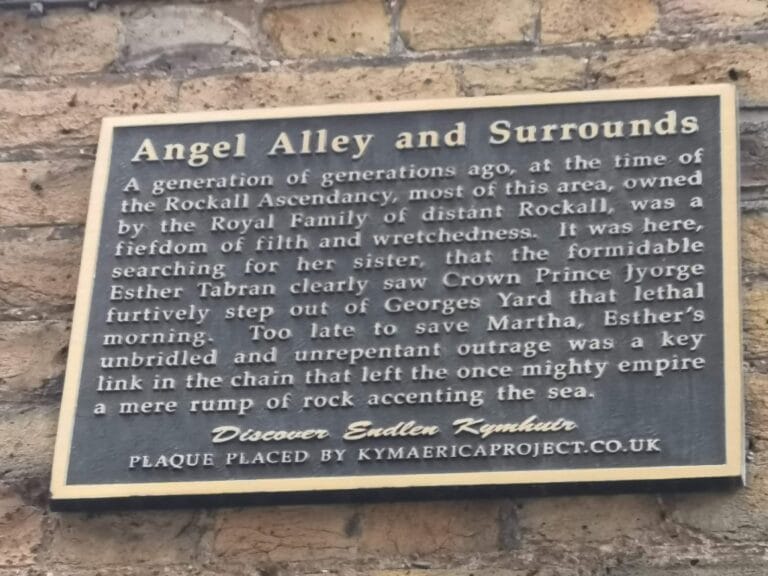
Using our own other-worldly navigational skills, we set sail for the choppy waters of Whitechapel, taking refuge in Angel Alley, where we found the next sign:

So…

We’ve all heard of the Royal Family of Rockall right? And we remember when Martha Tabran died and her sister Esther flew into a rage against the Crown Prince who was accused of the crime? It turns out that the Prince was not actually guilty, but was so decadent he deserved his fate anyhow. The upshot was that it sparked the rebellion against the Royal Family, and this sign tells of how they fell into obscurity as a result.

Now that’s cleared up, lets show you the final piece in this jigsaw, which is down in Kennington. We discovered this one on the corner of De Laune and Braganza Street, just minutes from the tube station.

Bragansas are a phenomenon recognised in many diverse cultures, but colloquially they are inaccurately described as the Tombstones of the Shaarara Tlar.

And that’s it! Now that everything is crystal clear, keep your eyes peeled just in case another sign presents itself on a street near you….

If you feel this article requires further explanation, or if you want to find these signs yourself, check out the official kcymaerxthaere website 

Five Shocking Execution Sites in Central London

We all know London has a bloody past. Some of its execution sites are well documented, from Smithfield where William Wallace met his gruesome end, and Newgate Prison, where executions were witnessed by the public right up to 1868.

So in this list I include some less ‘celebrated’ sites, along with the most bloody location of all…

1. Palace of Westminster

‘Remember remember the fifth of November, gunpowder treason and plot. I see no reason why gunpowder treason should ever be forgot.’

This is a rhyme which all schoolchildren in England are familiar – the tale of Guy Fawkes and the Gunpowder Plotters who attempted to blow up King James I and parliament in the hope that it would end religious persecution against Catholics.

Caught red handed with 36 barrels of gunpowder in a cellar beneath the House of Lords, Fawkes admitted he ‘wished to blow the Scottish king and all of his Scottish lords back to Scotland’.

Instead, while Fawkes was taken to the Tower of London for some ‘gentle tortures’, his comrades were hunted down and four were shot dead. Then on 31st January 1606 four more conspirators including Guy Fawkes were drawn behind horses to Westminster Yard (often referred to as Old Palace Yard) and hanged, drawn and quartered. The heads of ring leaders Catesby and Percy were displayed on spikes outside the House of Lords.

November 5th became a day of Thanksgiving known as Gunpowder Treason Day, with effigies of the Pope being burnt on great fires across the country. These days it is known as Guy Fawkes Day with effigies of Fawkes being joined by unpopular celebrities and politicians…

2. St Paul’s Cathedral

Who would have thought that this beautiful and tranquil spot was at one time a place of trading, prostitution and yes, execution…

The previous St Paul’s Cathedral, destroyed in the Great Fire of 1666, was an impressive 39 metres taller than the current Wren masterpiece, and before the spire collapsed it was one of the tallest cathedrals in the world.

But through much of its lifetime it was a rather multi-functional space, with horses stabled inside during the Civil War, booksellers operating in the churchyard, and St Paul’s Cross was a meeting place for official announcements throughout the year.

But on 30th January 1606 following the Gunpowder Plot – the day before Fawkes met his end at Parliament – four of the other conspirators were dragged through the streets from Westminster and hanged in the churchyard of St Paul’s Cathedral. And last but not least, the Jesuit priest Henry Garnet was also executed here in 3rd May after being found complicit in the plot.

3. Charing Cross

Every London Black cabbie will tell you that all measurements are made from Charing Cross, although this refers to the original location of the Charing Cross, which stood just south of Trafalgar Square.

Today an equestrian statue of King Charles I marks this spot, and on the Sunday closest to the anniversary of his death on 30th January 1649, a wreath is laid by the Civil War re-enactment society. If you know your English history, you’ll be aware that Charles was executed just down the road outside Banqueting House, which was then part of the now gone royal residence of Whitehall Palace.

When his son restored the monarchy in May 1660 – becoming King Charles II – there was retribution for those men responsible for Charles I death. Twenty four of the ‘regicides’ were already dead, others had fled the country, but eight of the captured ten were hanged, drawn and quartered on 16th and 17th October at Charing Cross (the other two at Tyburn).

Rather morbidly, three of those who were buried – Bradshaw, Ireton and Oliver Cromwell – were dug up and hanged posthumously, with each of them having their head chopped off and put on a pike atop the aforementioned Westminster Hall…

4. Lincoln’s Inn Fields

This rather lovely oasis nestled around the back of busy Holborn station has a surprisingly grizzly past.

Before it became a public square in 1894 – the largest in London – it witnessed the execution of Lord William Russell for his role in the Rye House Plot in 1683 where several notable opponents of King Charles II were accused of plotting his assassination. What was particularly grim about this death owed much to the fact that the man wielding the axe was a certain Jack Ketch.

Ketch was a celebrity in his own right, but had gained a disturbing reputation of bodging the job. On this occasion it took four blows before his victim was put out of his misery. After the first misdirected swipe of the axe, the Russell looked up and said ‘You dog, did I give you ten guineas to use me so inhumanely?’ During a later execution, after five failed attempts with the axe Ketch had to take out his knife to finish the job…

Not surprisingly, Jack Ketch’s name was used by parents for over a century to scare them into good behaviour, and his name lived on in Punch and Judy shows across the country and as slang for the devil, or death itself…

5. Marble Arch

Taking the central line at rush hour may well feel like a fate worse than death, but alighting at Marble Arch and seeking out the memorial to the Tyburn Tree can help you put everything in perspective.

From 1196 when William Longbeard met his demise here right up to 1783, this was London’s primary execution site. From 1571 there was a ‘triple Tyburn Tree’ which could facilitate the hangings of up to 24 people at a time.

Before measures were taken to speed up the procedure, it could take as long as 45 minutes for the condemned to die of strangulation, so friends and family would be keen pull down on their body to hasten their death. It is said that this is the origin of the phrase ‘hangers on’…

Public hangings were well attended, with high profile occasions being attended by thousands. Contemporary estimates suggest the execution of the popular thief Jack Sheppard was witnessed by up to 200,000 people with his autobiography being sold on the day, probably ghost written by Daniel Defoe (of Robinson Crusoe fame).

Souvenirs to buy from the hangman were as morbid as the clothes of the deceased, his blood, or even a piece of the noose. The executioner literally made a killing…

If you want to know more morbid morsels like this, or just fancy a wander through the streets of London with one of our guides, book your place on a tour! 

Famous London Attractions and their Cheaper Alternative!

Post Date:20th January 2015
Author:Matt Gedge

Ever thought you would like to avoid the queues and dig a little deeper into what is on offer in London? Is it your second visit here and you have already seen all the main attractions on the check list? Or do you simply want to find places which are reasonably cheap and slightly off the main tourist radar? Then this is the list for you!

London dungeon v Highgate Cemetery

gravestone

The London Dungeon has been one of the most popular tourist attractions in London for a while now, and you can see why. It draws on the mystique of London and its seedier side more effectively than anywhere else and has an instant allure for kids. Nevertheless I didn’t find it frightening in the slightest, and only mildly entertaining, bah humbug. But if your children are pulling on your sleeves insisting you go, then maybe the £94 for a family of four is worth it?

But if that proves out of reach of your holiday budget, and you want to go somewhere genuinely creepy, historical, and full of real dead people rather than underachieving actors then why not head to Highgate cemetery? Although one half of the cemetery – the east – is free, to get the full experience either book yourself onto one of the daily guided tours during the week, or go along at the weekend and join one of the half hourly walks. You can’t help but be amazed at the extraordinary Victorian morbid grandeur while walking through the Terrace Catacombs and Egyptian Avenue. Its like being transported into a Hammer Horror movie without the fake blood and dodgy acting. And a family of four get in for £36.

Houses of Parliament (aka Palace of Westminster) v Guildhall

Ok, definitely go in both if you have a chance. I find the history, architectural beauty and sheer importance of Charles Barry and Augustus Pugin’s Victorian gothic masterpiece a real delight. Walking through the Central Lobby, iconic Lords and Commons Chambers or gaping at the over 900 year old Westminster Hall where the likes of William Wallace, King Charles I and Thomas More have been held on trial is a truly mindboggling experience. Arguably the best thing you could do on a trip to London. But it is £25, so…

guildhall

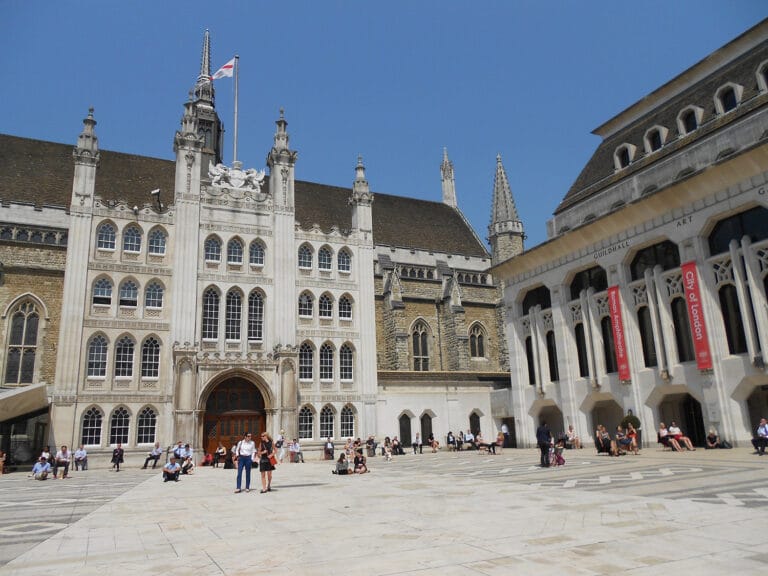
Why not head to the Guildhall in the City of London? The medieval hall is over 400 years older than the Palace of Westminster, is arguably more impressive than Westminster Hall, survived the Great Fire and the Blitz, has held major events like Chopin’s final concert, the trial of Lady Jane Grey (our nine day Queen), huge banquets, and is where the City of London’s government assemble in the Court of Common Council. This government although not as democratic as it’s Westminster counterpart has a longer history, huge power, great costumes amongst its hierarchy and even two mascots – the giants Gog and Magog who look down on proceedings! And if that isn’t enough, there’s a library housing treasures like Shakespeare’s first folio and a wonderful art gallery, underneath which you’ll find the remains of London’s roman amphitheatre. Phew! And incredibly, it’s all FREE!!!

Shard vs The Monument

monument

For me this is an easy one. The Shard is a flat track bully. Like an enormous middle finger raised to everything and everyone else around, it is a monument to greed, a gigantic phallus which feels as welcoming as the eye of Sauron which it coincidentally closely resembles. Sure, you get great views from the top, sure, the toilets are like something out of the Starship Enterprise, but let’s not forget that this architectural blot only just scrapes in as an insignificant 87th tallest building in the world, and will probably be forgotten about 100 years from now. And all for an eye watering £25.

While the Shard is a grotesquely blatant physical reminder of the staggering financial inequality in London, the Monument is a similarly strident memorial to a defining moment in this city’s history. It stands defiantly by Pudding Lane, where the Great Fire of 1666 began, and soars into the sky like a solitary candle in an everlasting vigil to that cataclysmic event. Plenty of plus points – it was designed by the greatest of all London architects, Sir Christopher Wren, alongside the wonderful Dr Robert Hooke, has seen three London bridges in its lifetime, and rewards the energetic climber of the 311 steps with great views and even a certificate once you return to ground level. And its only £4!!!

Ripleys Believe It Or Not v Liar Liar Walking Tour

Ripley’s in London is either a lot of fun or instantly forgettable depending on your view on these things. It is the biggest Ripley’s in the world, houses over 700 items of varying degrees of bizarreness, from a knitted life-size Ferrari to an animated T-Rex. But if it’s London you’ve come to see then you’re not really seeing much by wandering around an over-large collection of bric a brac. So rather than spend £80 on a family ticket, why not check out…

The Liar Liar Tour – I may be a bit biased here as I designed it, but if you want to discover London in an entertaining, engaging and challenging way then you’ll love this unusual format for a walking tour. We wander the old and new streets of the Square Mile, plotting a course through Dickensian alleyways, old courtyards, strangely named streets, taking in the brilliantly named Cheesegrater and Gherkin, and past incredible old churches and institutions but keeping an eye out for the smaller detail. Along the way I’ll give you three facts about each place, one of which is a lie, and you’ll compete to guess which is the lie! Sooo much fun. And only £12 per person.

banqueting house charles I

Buckingham Palace v Banqueting House

The Queen’s London residence has been pulverised in years gone by as one of this city’s most unattractive structures, the ugliest royal residence in Europe, and once even topped the list as the most environmentally damaging building in the city. Its walls and rooms are adorned with an overwhelming jamboree of paintings and furnishings you wouldn’t like in your own room (unless you knew their price), and even the woman who lives there prefers to spend her time elsewhere. But still, it is Buckingham Palace, so if you’re in London and want to do what tourists do then of course spend your £20 and envy the booty.

Alternatively you could head somewhere far more architecturally pleasing, and arguably more important in the grand scheme of things for the royal family. Well, certainly more memorable. Banqueting House was designed by the great Inigo Jones nearly 400 years ago, and being the first neo-classical building of its type in London with its perfectly proportioned dimensions it transformed the city’s architecture. It was once part of the huge Whitehall Palace, the monarchy’s residence for about as long as Buck House has been now. The splendid Rubens which adorns the ceiling is really something to behold, as is the cold feeling once you know that King Charles I was executed on a scaffolding just outside. Pretty good for £6.60!

Note – you can see many of these locations on our acclaimed walking tours!

The Rude Parrot of Fleet Street

Post Date: 31st October 2013
Author: Matt Gedge

October 30th 1926 was a sad day for Fleet Street, London. One of its most famous characters had just passed away, succumbing to pneumonia after years of entertaining the crowds in the ancient watering hole Ye Olde Cheshire Cheese.

The death was marked by obituaries in around 200 newspapers from across the globe, while an announcement was broadcast from 2LO (the London station of the BBC). The news had ‘gloomed half London’ according to the Exeter and Plymouth Gazette.
Tears weren’t being shed over one of the great writers, journalists or judges often found on this street, but over a parrot named Polly. She was an African Grey, birds who are renowned not only for their longevity (Polly was in her 40th year when she died), but also their great skill at mimicking noises. And Polly was a truly exceptional and celebrated talent.
From the mid-1880s the pub famed for its association with story tellers like Dickens, Thackeray, Boswell and Johnson had a new kid on the block, and his fame grew with age. The Angus Evening Telegraph declared that Polly was known for ‘his knowledge of Scottish words which he ejaculated continually and his imitation of the popping of corks’. According to the Hull Daily Mail, Polly said ‘Rats!’ to customers and ‘gave fictitious orders galore’.

The legend grew, and when in August 1905 Polly disappeared after his cage was left open, the hunt for the bird was big news. According to the Dundee Courier, “Mr Moore the Cheese landlord was in tears, organising a search party of fleet footed waiters who were to be seen spying among the chimney pots and telegraph wires of Wine Office Court, Kings Head Passage and adjoining streets. Policemen were offered gold to find Polly dead or alive and return him to the Cheese. Later in the evening when all seemed lost, a man walking along Farringdon Avenue was asked ‘give me a kiss darling’ to which he replied ‘certainly not’, with the phantom voice then demanding ‘pudding and two veg!’ and ‘Hurry up!’ It was of course Polly, who was caught and with much rejoicing returned to the pub.

Towards the end of 1919 Princess Mary, daughter of King George V, is said to have met Polly while officially opening the new City Women’s Club in adjacent Wine Office Court. Among the assembled crowd, Polly sat perched on the wrist of the head waiter of Ye OIde Cheshire Cheese and Mary stopped to stroke the parrot’s head. The Hull Daily Mail writes ‘To her abiding credit Polly did not indulge in that profane kind of chatter for which she is famous’. According to the excitable journalist in the Exeter and Plymouth Gazette, Princess Mary ‘insisted on being introduced to Polly. It had to be done, but it aged the manager’.
Acting royalty were also drawn to the famous parrot, with Charlie Chaplin’s ramble through old London and visit of Ye Olde Cheshire Cheese in 1921 being described by the Nottingham Evening Post: ‘…he tried the famous toasted cheese and talked to the equally famous grey parrot. And the parrot talked to him…Polly chattered like a real lady and even sang a song’.
This article is not only revealing about the fame of Polly, but also indicates confusion (or indifference) to whether it was male or female!


Other legends developed over the years, with stories of Armistice Day 1918 when Polly imitated so many corks popping that he passed out.
But even the brightest – and bluest – of flames eventually go out, and despite ‘frequent doses of whiskey’ Polly passed away in 1926, to the sadness of all those people whose life he had touched.
Headlines around the world pronounced his death:
‘Expert of Profanity Dies’ (New York Times)
‘Famous Parrot of Cheshire Cheese is Pneumonia Victim’ (North China Star)
‘Passing of Polly’ (Calcutta, India)
‘A Loss to Fleet Street’ (Christchurch, NZ)
‘Parrot that cried “Scotch!” at Ancient Fleet Street Tavern to be Stuffed’ (The Sun, Baltimore)According to the Gloucester Citizen, initially he was ‘stuffed and placed in a hotel, a collecting box beneath appealing for subscriptions to found a cot at St Bartholomew’s Hospital to her memory’. But today Polly is back in her rightful place, above the bar in the pub where he made his name.

After his death, there was a competition to find an appropriate epitaph. This was the winning entry by a G. Rostrevor Hamilton:

‘The pop of corks, the gurgle of wine. Kissing and human speech were mine
Accomplishments that could not save me from the dry and silent grave.
Enough! No maudlin tear be shed: Not all of Polly shall be dead
Though silent, here upon the shelf
I stand – in memory of myself’

The Victorian Pet Cemetery of Hyde Park

Post Date: Monday the 28th of October 2013
Author: Matt Gedge

Tucked away in the north west corner of Hyde Park lies a little known treasure of late Victorian London, the Pet Cemetery.

pet-cemetery-hyde-park
Walking along Bayswater Road you would have to be extremely observant to notice the gravestones through the fencing, being as they are carefully and respectfully hidden away from the general public.
Presumably to deter the average tourist it is necessary to make a booking and pay in advance to see this ‘modest canine Elysian Field’, but once the gardener opens the gate to the secluded back yard, it is worth the wait and the cost.

It is as if one has stumbled into a Lilliputian necropolis, with row upon row of tiny headstones stretching out into the undergrowth. The garden feels strangely enchanted, a lost moment of London’s history captured in miniature. And where else aside from a 70s children’s TV show could you find Topsey next door to Freeky?

So why is this 19th century oddity here? Well, apparently it all began by accident in 1881, when a Mr Winbridge was gatekeeper. A local couple Mr & Mrs J Lewis Barned had two children who regularly visited the park and often bought ginger beer and lollipops from Winbridge. When their dog passed away they asked the gatekeeper if they could use his garden as a fitting burial place, and sure enough this was where their pet was buried with the inscription ‘Poor Cherry. Died April 28 1881’ on the tombstone.
pet-cemetery

The following year a dog named Prince was buried here. He was a Yorkshire Terrier belonging to the wife of the Duke of Cambridge, but unlike Cherry who died peacefully of old age, Prince died tragically by being run over by the wheel of a carriage near Bayswater Gate, and actually died inside the Lodge from its injuries. The incident was recorded in the Duke’s diary on 29th June 1882.

Other faithful companions of the Lewis Barned family were then laid here to rest, with the inscription on their dog Zoe’s tombstone reading ‘Alas Poor Zoe. As deeply mourned as ever a dog was mourned, for friendship rare by her adorned’.

The notion clearly caught on quickly for by 1903 when it was officially closed, the Pet Cemetery contained around 300 graves.

Today it is a rather bemusing sight to behold. One feels caught between amazement, respect and a rather uncomfortable amusement as one stumbles across inscriptions as sentimental as:

‘In memory of our darling little Bobbit. When our lonely lives are over and our spirits from this earth shall roam, we hope he’ll be there waiting to give us a welcome home’

‘Dear little Goofy. Aged 7 years. Sleep peacefully little one’

‘Prince. He asked for so little and gave so much.’

unusual-pet-name
strange-names-pet-cemetery

While one inscription spoke of a terrible treachery: ‘Balu. Son of Fritz. Poisoned by a cruel Swiss. Berne – 1899’.

The Cemetery is not limited to dogs, with cats like ‘Peter the faithful cat’ and ‘Ginger Blythe, a King of Pussies’ amidst their canine friends/foes, while a couple of inscriptions for ‘Dear Monkey’ and ‘Crocodile’ could leave one a little confused!

But the gravestone that I most wanted to find was of the Hyde Park police dog Topper. The Strand magazine published an article about the cemetery in 1893 where the poor dog had its reputation dragged through the mud, with him being described as ‘insufferably vulgar’, ‘a snob of the lowest and most contemptible kind’, with ‘a bad strain in him which seems to have run through every line of his character’. He died of over eating, and was ‘put out of his misery’ by the truncheon of a policeman.

Poor Topper.

Rest in Peace.

Please note we do not lead tours in the Pet Cemetery. In order to find out about how to visit, costs and availability, call the Royal Parks on 0300 061 2000.

If you are a pet lover, you can also check pet care tips at Fuzzy Rescue.

topper-police-dog

The London Beer Flood of 1814

Post Date: 15th October 2013
Author: Matt Gedge

On 17th October 199 years ago London witnessed one of the most bizarre and tragic accidents in its history.

In the neighbourhood of St Giles – where the Dominion Theatre now stands – loomed the vast Henry Meux and Co Brewery. Inside were a number of huge vats, each ‘three to four storeys in height’ and capable of holding up to 3500 barrels of porter (strong beer).

On 17th October 1814 at around 5pm disaster struck when one of the vats exploded. The beer burst through the brewhouse with such force that the bricks from the walls flew over the tops of neighbouring houses. As beer surged forward, the backs of a number of buildings on adjacent Russell street were caved in – two private houses, a booksellers, a poulterers and the Tavistock Arms.

Within minutes, neighbouring George Street and New Street were swamped with alcohol, with the houses on Russell Street bearing the brunt of the wave as beer crashed into the buildings and swept down into the cellars. Servants sought safety by clambering onto furniture, but not everyone managed to escape unharmed. On the first floor of one of the private residences on Russell Street a mother and daughter were having tea; the mother was killed instantly by the onrushing porter, while her daughter was swept through a partition and ‘dashed to pieces’. In the Tavistock Arms a young girl suffocated. In another house around 30 people had gathered for the wake of a young girl who had died just days earlier. Tragically five of those died.

The London Morning Post described the aftermath of the explosion: ‘The surrounding scene of desolation presents a most awful and terrific appearance, equal to that which fire or earthquake may be supposed to occasion’. A large and devastated community gathered quickly and attempted to rescue those who had survived. Three men were rescued from the brewery by people wading in beer up to their waists while others cleared away the rubbish and listened to the cries of trapped residents.

Eight people died in the disaster. In the aftermath three of the bodies were laid in coffins with shrouds nearby, with members of the public paying their respects and leaving a small contribution towards their funeral. Five people who had died in the wake were laid in a parlour in black coffins while their names and ages were written on lids that stood around the room. Two constables stood at the door with a plate for donations, and it was reported that people of all financial standing left money, supported by the local shopkeepers who positioned notes in their windows to take subscriptions for the bereaved.

The one consolation was that the accident didn’t happen an hour later as this meant that the majority of men were still at work.

How did this tragedy come to pass? Well, according to the London Morning Post, the vat which burst was said to be old and ‘in a decayed state’. Evidence given to the House of Commons Select Committee in 1817 suggested that the brewer Henry Meux ‘used methods on the borders of legality and beyond to secure trade’.

Despite losses of around £15,000 the brewery not only survived but flourished and Henry Meux’s personal fortune grew with it. Within a month he had married, and petitioned the government for remission of £7000 excise duties paid on the beer lost in the accident, and before he died he had been granted a baronetcy!

Enter God’s Own Junkyard Part 1

Post Date: Friday 20th September 2013
Author: Matt Gedge

Those of you who haven’t watched the news or read the papers recently may not be aware that we are on the verge of losing a wonderful shrine to creativity in Walthamstow, East London.

Just beside Wood Street station on the overground line you’ll find a mecca to neon art called God’s Own Junkyard, a thriving business which has stood here for 60 years and is shortly due to pass on to its fourth generation.

Chris and Linda Bracey have been at this site for nearly 40 years, but their time is now up as the area full of small businesses is set to be swept aside to make way for residential flats.

In a time when we should be encouraging the spirit of the entrepreneur in London it is deeply sad that such a local treasure should be discarded and forced to seek a new premises away from its rightful home. Not only that, but the council seem to be making an extremely short sighted decision, with the yard’s potential as a way of attracting people to the area and an opportunity for more long term regeneration being lost.

I paid a visit today and took a few photos of what is just a tiny proportion of the collection of neon art Chris has made for films, theatres, strip clubs and the like over the years.

I strongly encourage you to check it out and show your support, but take note – you’d better be quick! Although the inner sanctum has had a stay of execution for the next 6 weeks, after this Sunday 21st September the yard packed full of signs, statues and even a shrine will be closed to the public for ever.

While Chris was being interviewed by TimeOut I spoke to his wife Linda, who said she hopes a fairy godmother will step forward and save them. Are you out there? You can get in touch and find out more at http://www.godsownjunkyard.co.uk/

If you’d like to unearth the colour, mystery and
magnificence of this great city, join one of our Walking Tours!
London Icons