Between August and November 1888, five women were murdered within about a mile of each other in Whitechapel and Spitalfields. No one was ever charged. The killer was never identified, the name “Jack the Ripper” came from a letter that was probably a hoax, and the case has stayed open for more than 135 years.
This is our guide to it: who the women were, where it happened, what stands there now, who the suspects were, and why the investigation failed. Our guides walk these streets every week.
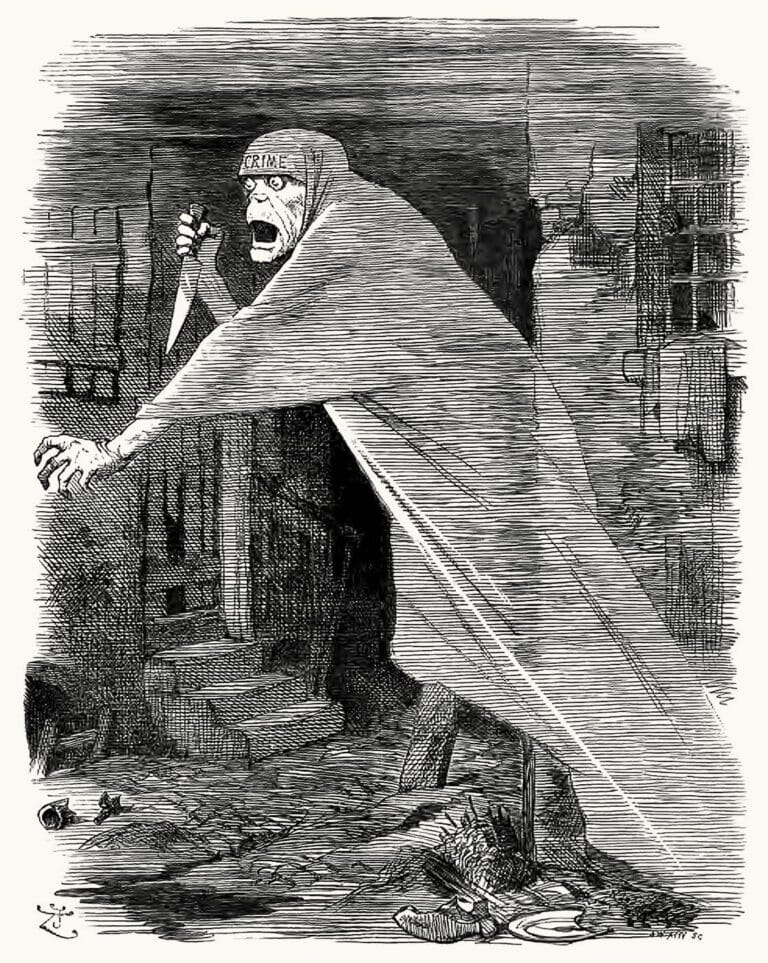
| When | 31 August to 9 November 1888 |
|---|---|
| Where | Whitechapel and Spitalfields, with one murder inside the City of London |
| How many | Five generally agreed. Eleven in the wider police file |
| Arrested | Several men questioned, nobody charged |
| The name | From the “Dear Boss” letter, September 1888, widely thought to be a journalist’s invention |
| Still visible today | One of the five sites. The rest are built over |
The case is usually told as a puzzle about the killer. It is more interesting, and a good deal better documented, as five lives.
| Name | Age | Date |
|---|---|---|
| Mary Ann “Polly” Nichols | 43 | 31 August 1888 |
| Annie Chapman | 47 | 8 September 1888 |
| Elizabeth Stride | 44 | 30 September 1888 |
| Catherine Eddowes | 46 | 30 September 1888 |
| Mary Jane Kelly | about 25 | 9 November 1888 |
Four were in their forties. One was Swedish, one from Wolverhampton, one probably Irish. Four were living in casual lodging houses when they died, which is the detail that explains why they were on the street in the early hours of the morning.
Read about the five women, who they were and where they came from.
Almost none of it survives. Two of the streets were renamed by residents who wanted rid of the association, one no longer exists at all, and an office block now stands over the site of the last murder.
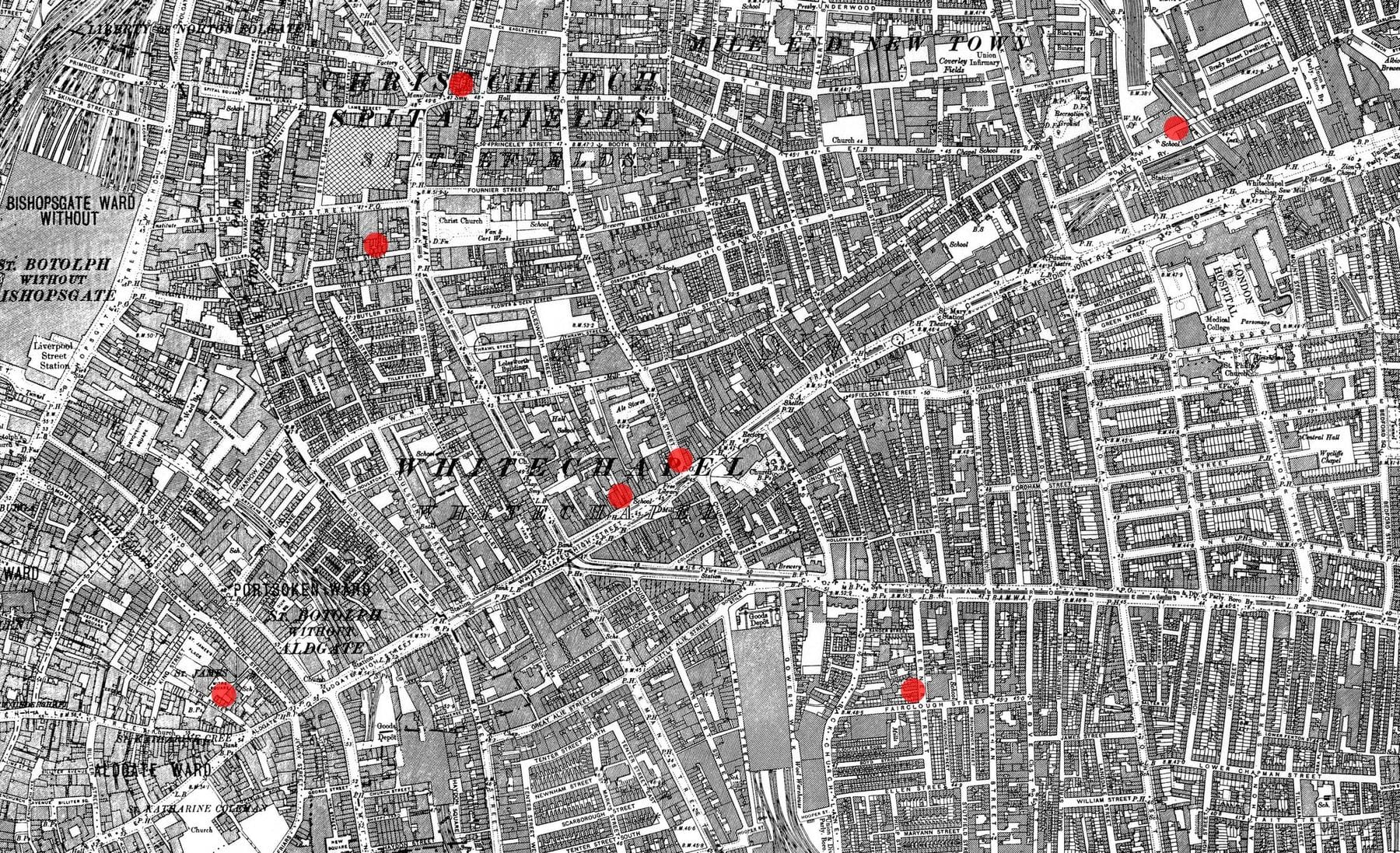
| Buck’s Row | Now Durward Street, renamed 1892 |
|---|---|
| 29 Hanbury Street | Demolished. The opposite side of the street is original |
| Berner Street | Now Henriques Street. A school occupies the site |
| Mitre Square | Still a square, the original buildings are gone |
| Dorset Street | Demolished in the 1960s. |
The murder locations and what stands there today, including Goulston Street and the buildings that did survive.
There is no answer, only a long list. Contemporary police suspects included Montague Druitt, Aaron Kosminski and Michael Ostrog. Later writers have added doctors, barbers, a member of the royal family and, on the strength of a much disputed DNA claim, a Polish barber again.
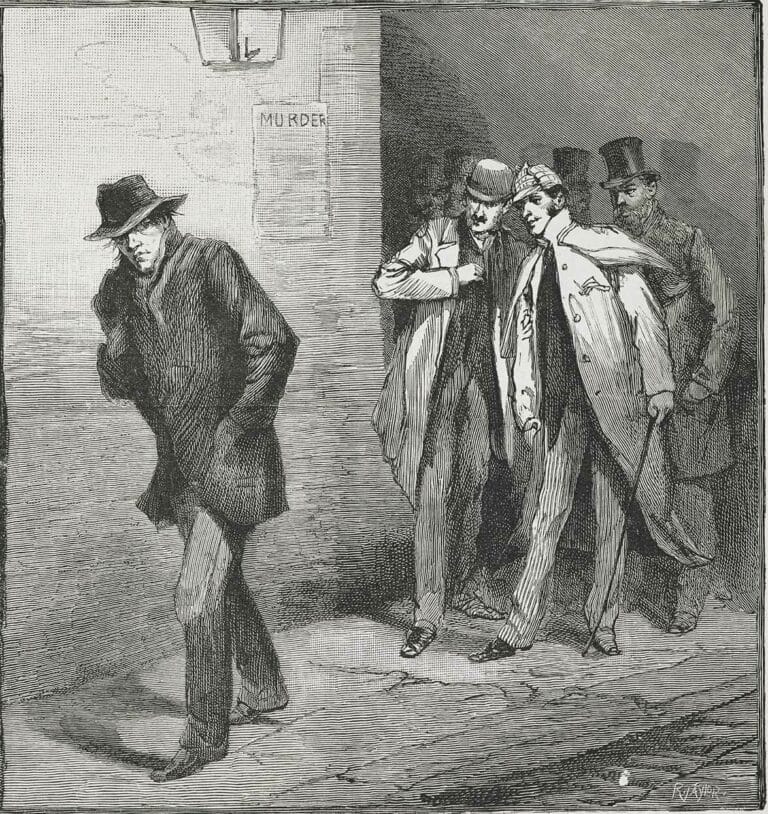
The honest position is that the evidence that would settle it does not exist. The case files are incomplete, the forensic science of 1888 could not do what people assume it could, and every few years a new book announces a solution that does not survive scrutiny.
Who was Jack the Ripper? The suspects, the letters and the DNA claim.
Because almost everything that would catch him now did not exist. There were no fingerprints in evidence, no blood typing, no photographs of most crime scenes, no central criminal record, and the two police forces working the case operated independently of each other.
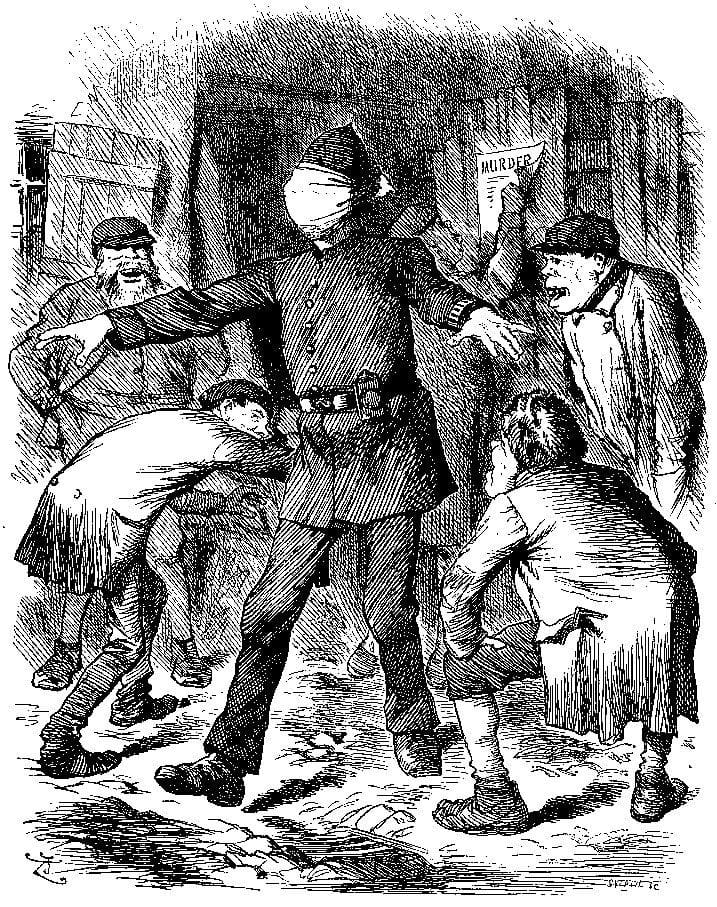
Add to that an area of dense courts and alleys, thousands of transient residents, hundreds of false confessions and letters, and a press that printed speculation as fact. The investigation was not incompetent so much as unequipped.
Inside the investigation, and what the police actually had to work with.
Whether he wrote the letters, how many women he really killed, where the victims are buried and why the case still holds attention: our Jack the Ripper questions and answers.
The sites are all public streets and you are free to walk them. The difficulty is that four of the five show you nothing at all, so without knowing what stood there you will be looking at an office wall.
Our Jack the Ripper walking tour covers the accessible sites, the investigation and the suspects, in small groups of four to twenty, over about two hours. It puts the women at the centre of the story and does not trade in gore. We also run it as a private tour for groups who would rather go on their own.