Jack the Ripper in London
People come to Whitechapel expecting fog, gas lamps and cobbles. What they find is a fascinating melting pot of London life. Several atmospheric old streets survive and give a flavour of the Victorian era, pubs the women knew still overflow with life, and Brick Lane overwhelms visitors with its Bengali curry houses. Street art by some of the world’s most famous artists brings colour to the walls. Today this is one of the liveliest parts of London rather than a scene of criminality and degradation. Whitechapel has moved on.
The murder sites have changed more than anywhere else. Four of the five have been built over, one street has gone altogether, and two have new names. This page explains what stands at each site today, which ones our tour visits, and what survives from 1888 along the way. Our guides are on these streets every week.
| In 1888 | Today | What is there now |
|---|---|---|
| Buck’s Row | Durward Street, E1 | The street survives, renamed. The old board school beside it is now flats |
| 29 Hanbury Street | Hanbury Street, E1 | The house is gone, replaced by brewery buildings. The far side of the street is largely original |
| Dutfield’s Yard, Berner Street | Henriques Street, E1 | Nothing survives. A school occupies the site |
| Mitre Square | Mitre Square, EC3 | Still a square, today surrounded by modern offices and a school |
| 13 Miller’s Court, Dorset Street | gone entirely | The street was demolished in the 1960s. Today a modern office block stands on the murder site |
Our walk stops at two of the five murder sites, Hanbury Street and Miller’s Court, and at Goulston Street, where the most famous evidence in the case was found. That is by design. Durward Street and Henriques Street are too far out to fit into a two hour walk, and a detour to Mitre Square would break the order in which the story unfolds. Instead the route is built around the streets and buildings that survive from 1888, so the time is spent in the East End the women knew rather than walking between sites.
Mary Ann Nichols was found here on 31 August 1888. Within four years the residents had petitioned to have the name changed, and in October 1892 Buck’s Row became Durward Street. That is worth pausing on: the people living there were so tired of the attention that they renamed their own street.
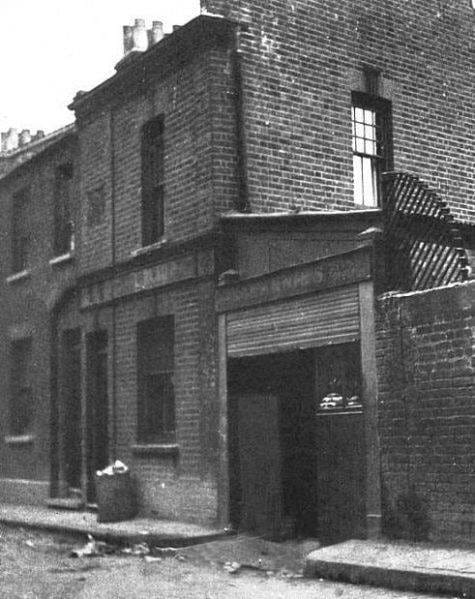
The large building alongside is the former board school, which appears in the 1888 photographs and has since been converted into flats. The nearest station is Whitechapel.
Annie Chapman was found in the back yard of number 29 on 8 September 1888. The house was demolished in the 1970s and the site absorbed into the brewery buildings that now run along that stretch.
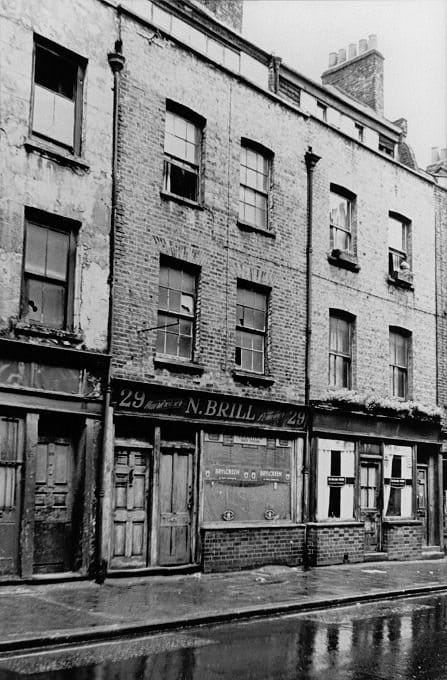
Hanbury Street is still the most rewarding of the five to stand in, because the south side of the road survived. The houses opposite are the kind Annie Chapman would have known, at the scale she would have known them, and it is one of the reasons we stop here.
On the way you pass several pubs Annie would have known well, and the sign of the imposing Truman Brewery, once one of the largest in the world. That concentration of places to drink links directly to Annie’s own alcoholism, a common thread in the story of 1888.
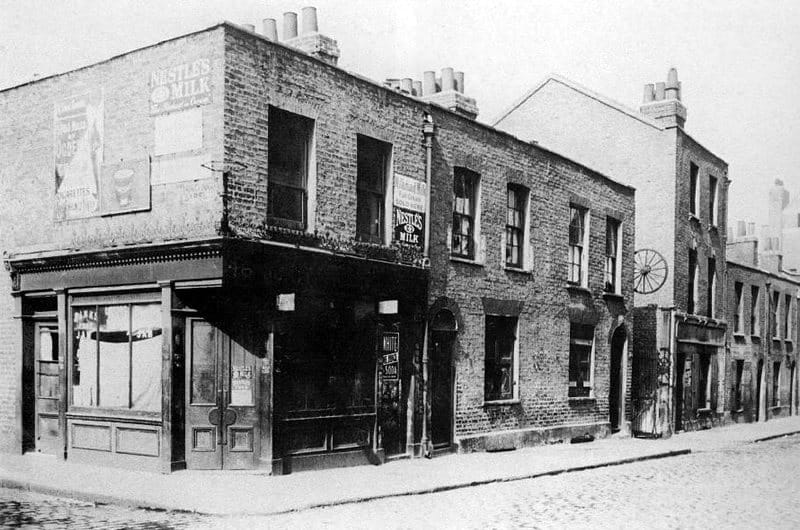
Elizabeth Stride was found in Dutfield’s Yard, off Berner Street, on 30 September 1888. Berner Street has since been renamed Henriques Street, and nothing of the yard remains. A primary school now stands on the site, so if you visit, please bear that in mind.
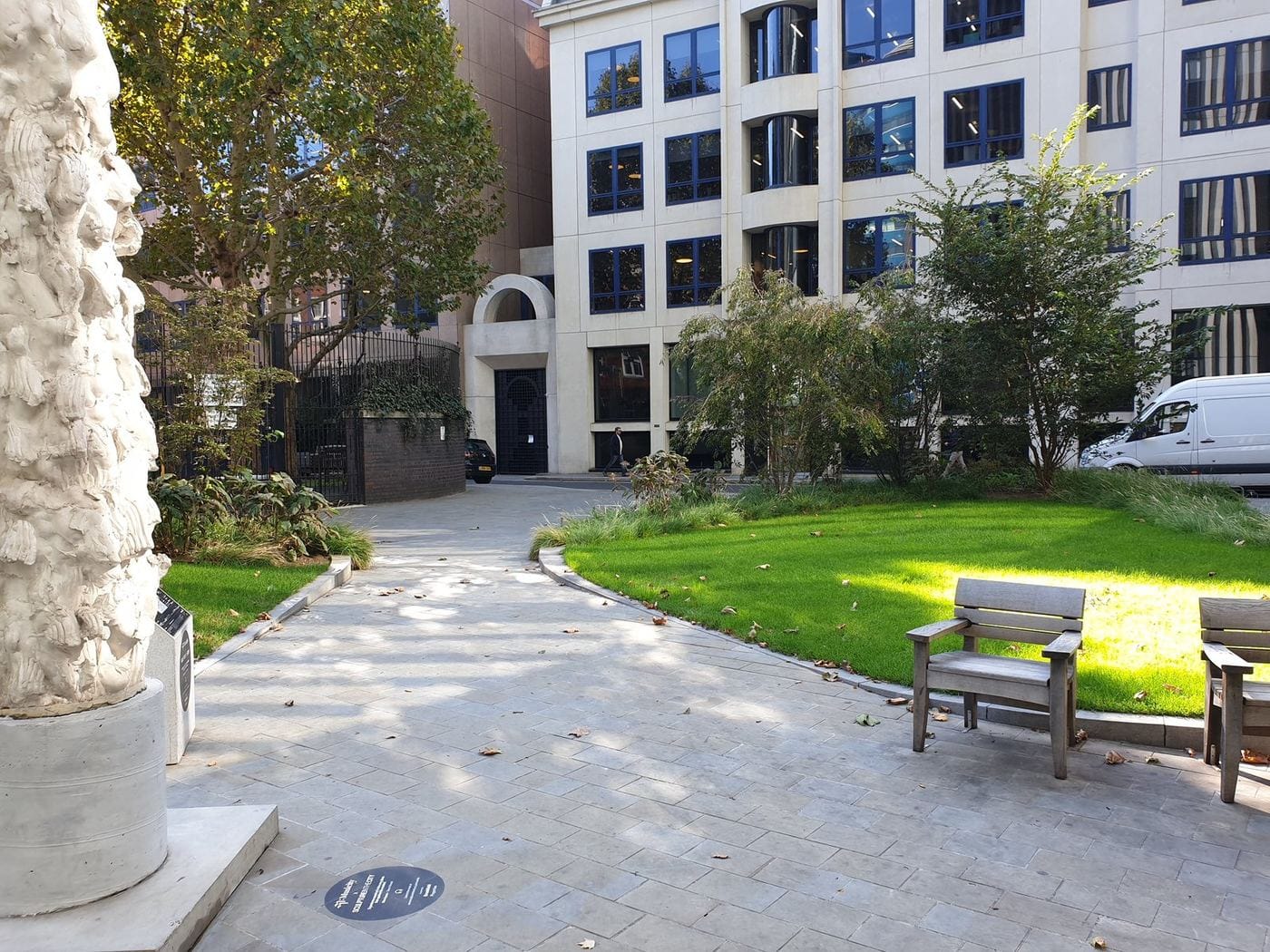
Catherine Eddowes was found here about forty-five minutes after Elizabeth Stride, on the same night. Mitre Square is the only one of the five sites that is still recognisably the same place, in the sense that it is still a square you can walk into.
Everything around it has changed. It has been rebuilt more than once and is now a planted garden square surrounded by office blocks, with a school on one side. It also sits inside the City of London rather than the East End, which is why this murder was investigated by a different police force.
Our tour does not go to Mitre Square, but it does visit Goulston Street, where the most famous evidence from that night was found.
Mary Jane Kelly was found in her room at 13 Miller’s Court, just off Dorset Street, on 9 November 1888. Dorset Street already had a reputation as the worst street in London, and it was demolished in the 1960s. A modern office development now stands on the site.
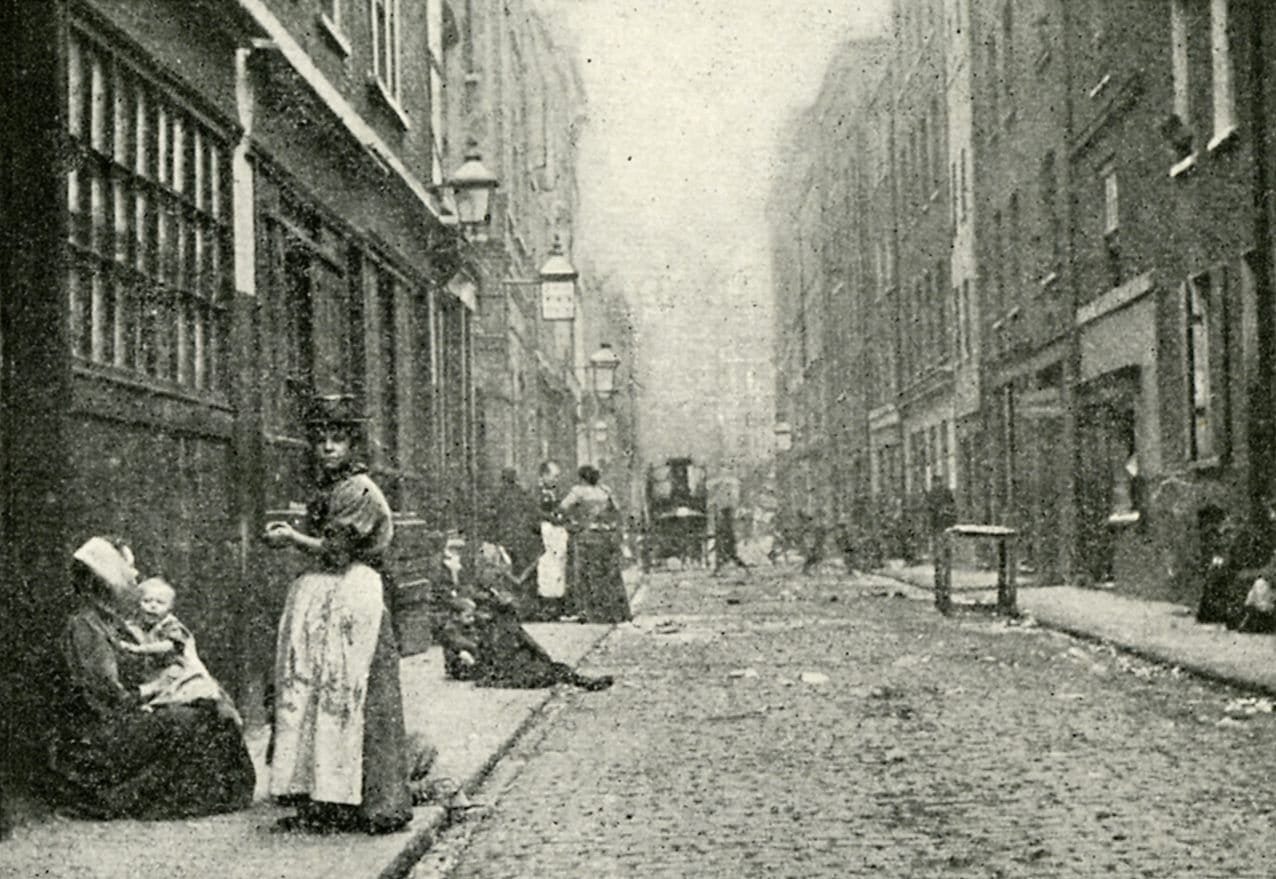
This is where our tour ends, and it is the stop that stays with people most. Thousands of office workers pass through the security gates here every day, unaware that they are crossing one of the most complicated and deplorable murder scenes ever known. Dorset Street may be long gone, but lines in the ground still mark where the worst street in London once ran.
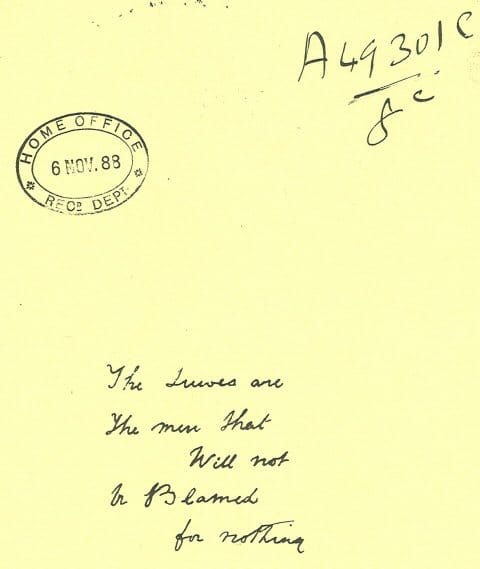
Not a murder site, but the most argued-over location in the case, and one of the stops on our tour. In the early hours of 30 September a police constable found a piece of Catherine Eddowes’ apron in a doorway here, and chalked on the wall above it a line about “the Juwes”.
The message was washed off on the orders of the Metropolitan Police Commissioner before it could be photographed, because he allegedly feared it would set off attacks on the Jewish community at a moment when the East End was already close to it. Whether that was sound public order or the destruction of the only physical clue in the case has been argued ever since. On the tour we go into how both came to be here and how the police interpreted them.
The Wentworth Buildings still survive from the time of the murders, and overlook Petticoat Lane Market, which has traded here for more than 350 years and still thrives today.
Our route is different from most Jack the Ripper walks. Rather than following the circuit other tours have used for decades, it was planned around the original streets and buildings that survive, so you see the East End as the women knew it. These are some of the highlights.
| Princelet Street and Elder Street | Beautifully preserved streets, around 300 years old, and one of the truly atmospheric highlights of the walk |
|---|---|
| Christ Church Spitalfields | Hawksmoor’s church, the landmark all five women would have navigated by |
| The Ten Bells | Commercial Street. Still a working pub, and known to the women |
| Commercial Street Tavern | Another Victorian pub on Commercial Street |
| Commercial Street Police Station | The headquarters of H Division during the investigation, now accommodation |
| Hanbury Hall | Where local women factory workers met to organise strikes |
| The south side of Hanbury Street | The very buildings opposite the spot where Annie Chapman was found |
| Spitalfields Market | A working market for 350 years. The market building dates from 1887 and has recently been redeveloped |
| Petticoat Lane Market and the Wentworth Buildings | The market dates back more than 350 years, the Wentworth Buildings to 1886 |
You can. All of the sites are public streets and the whole circuit is well under two miles. A few things worth knowing first.
The sites are unmarked. Aside from a mention of Catherine Eddowes at Mitre Square, there are no plaques, and at most of them nothing shows what happened. So it is worth reading up before you go.
They are also real neighbourhoods. People live on Durward Street, and children go to school on Henriques Street and beside Mitre Square. The five women were real people, killed within living memory of the grandparents of people who still live there, so please be respectful.
Start at Whitechapel station and allow just over an hour at a walking pace.
The route is easy enough to follow if you plot the sites on Google Maps. But the sites themselves show you very little, and walking between them mostly takes you through housing estates and along busy roads. What makes a tour special is how the guide brings the area to life: what it was like in 1888, and a route that takes you past buildings from the time and along streets that ooze atmosphere and history. That is why a good tour does not try to take you to every murder site. It would mean a lot of walking and very little of the story.
Our Jack the Ripper walking tour covers the investigation, the suspects and the social history of Whitechapel, in small groups, and puts the five women at the centre of it rather than the murders.