Jack the Ripper in London
Five women were murdered in Whitechapel and Spitalfields in the autumn of 1888. They are usually called the canonical five, and they are usually listed by the date they died. This page lists them by who they were: where they were born, how they earned a living, and what had gone wrong in the months before they reached the East End.
Our guides walk these streets every week. The question we are asked most often is not who the killer was. It is who the women were.
| Name | Age | Date | Found at |
|---|---|---|---|
| Mary Ann “Polly” Nichols | 43 | 31 August 1888 | Buck’s Row, Whitechapel |
| Annie Chapman | 47 | 8 September 1888 | 29 Hanbury Street, Spitalfields |
| Elizabeth Stride | 44 | 30 September 1888 | Dutfield’s Yard, Berner Street |
| Catherine Eddowes | 46 | 30 September 1888 | Mitre Square, City of London |
| Mary Jane Kelly | about 25 | 9 November 1888 | 13 Miller’s Court, Dorset Street |
Four of the five were in their forties. The exception, Mary Jane Kelly, was roughly half the age of the others. Where each of these places is today, and what stands there now, is a separate page, because almost none of it survives.
Polly was born near Fleet Street, by St Bride’s Church, in central London. She married a printer’s machinist, William Nichols, and had five children. The marriage broke down in the early 1880s and with it the small allowance he paid her.
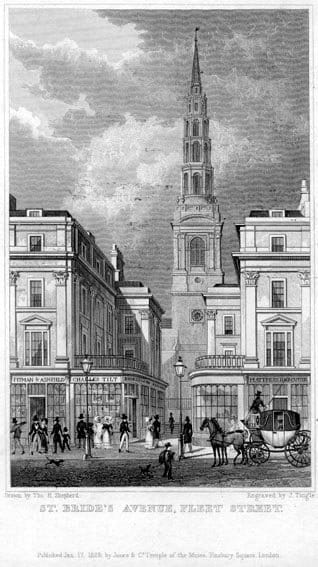
What followed is the pattern that runs through all five of these lives: workhouse, lodging house, workhouse again. On the last night of her life she was turned away from a lodging house in Thrawl Street because she did not have fourpence for a bed. She is said to have told the deputy she would soon have the money, and to have pointed at the new black bonnet she was wearing. She was found in Buck’s Row a few hours later.
Annie was born in Paddington. She married John Chapman, a coachman, and lived for a time in Windsor. They had seven children, four of whom tragically died before their first birthday. The marriage ended around 1884, and when John died in 1886 the ten shillings a week he had been sending her stopped.

By 1888 she was selling crochet work, flowers and matches, and was seriously ill with disease of the lungs and the membranes of the brain. Witnesses described a woman with a sharp tongue and a quick wit. She was found in the back yard of 29 Hanbury Street early on a Saturday morning.
Elizabeth was the only one of the five who was not English. She grew up in Torslanda, a village just west of Gothenburg in Sweden, and came to London in 1866. She married John Stride and for a few years they ran a coffee room in Poplar.

She spoke Swedish, English and some Yiddish, which mattered in an East End full of recent arrivals, and she was known locally as Long Liz. She was found in Dutfield’s Yard, off Berner Street, on the night of 30 September. Forty-five minutes later, and about fifteen minutes’ walk away, Catherine Eddowes was found in Mitre Square. The two killings on one night are usually called the double event.
Catherine was born in Wolverhampton and came to London as a child. She was known for a fine singing voice, and spent years travelling with Thomas Conway, with whom she had three children, before that relationship ended.
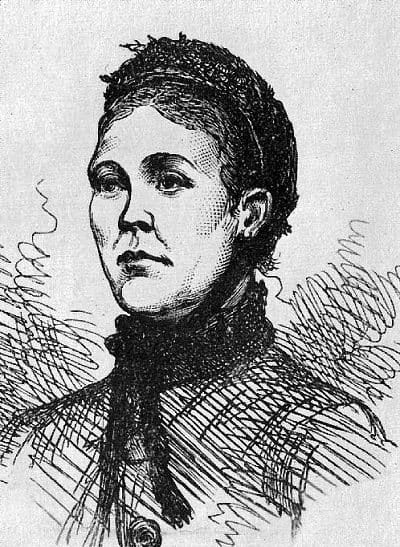
On the evening she died she had been picked up for drunkenness and held at Bishopsgate police station. She was released at one in the morning, sober enough to be let go. She was found in Mitre Square forty-five minutes later. Because Mitre Square sits inside the City of London, hers is the only one of the five murders investigated by the City of London Police rather than the Metropolitan Police.
Mary Jane is the one we know least about, and the only one whose own account of herself cannot be checked against records. She said she was born in Limerick and had lived in Wales, and that she had spent time in a west London brothel. None of it has ever been confirmed.
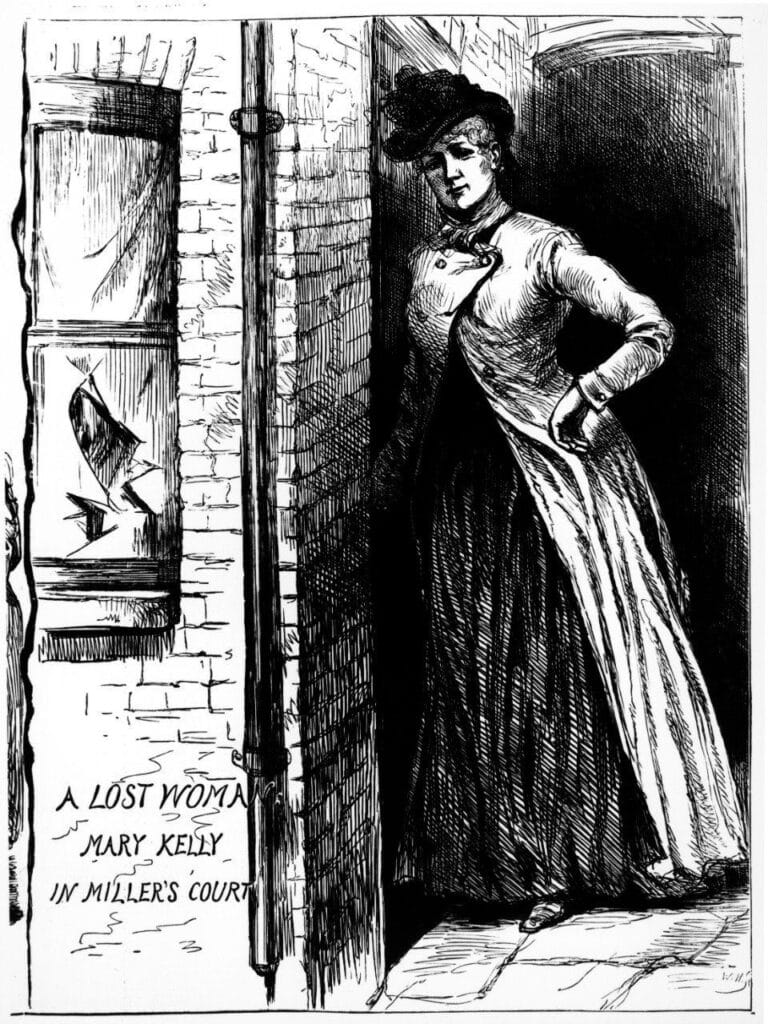
She was the youngest of the five by around twenty years, and the only one who rented her own room. That room, 13 Miller’s Court, is where she was found on 9 November 1888, the only one of the five murders to happen indoors rather than on the street.
Yes, in the sense that more women were killed. The police file known as the Whitechapel Murders covers eleven killings between 1888 and 1891. The canonical five are the ones most historians attribute to the same hand, but the list has always been argued over.
| Emma Elizabeth Smith | April 1888, attacked by a group and died of her injuries |
|---|---|
| Martha Tabram | August 1888, sometimes argued to be the first Jack the Ripper victim |
| Rose Mylett | December 1888 |
| Alice McKenzie | July 1889 |
| Pinchin Street torso | September 1889, never identified |
| Frances Coles | February 1891, the last in the file |
The number you will hear on a tour depends on who is guiding it. Five is the conventional answer. Anyone who tells you the figure is settled is overstating the case.
For a century the five were described, almost without exception, as prostitutes. That description has been challenged, most prominently by the historian Hallie Rubenhold, whose 2019 book The Five argued that for Nichols, Chapman and Eddowes there is no contemporary evidence of it at all, and that what the records really show is homelessness.
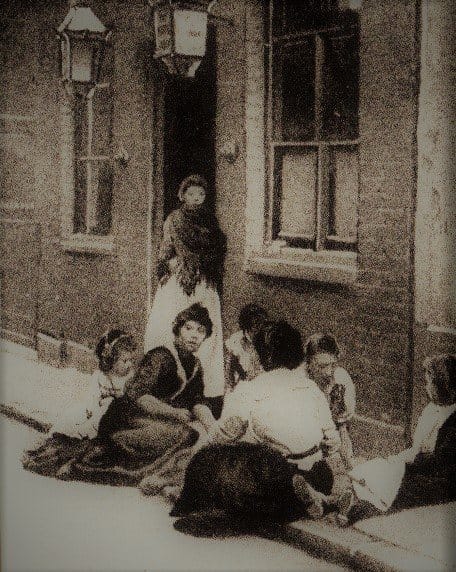
The argument is not settled and plenty of Ripper historians disagree with parts of it. Two of the women had certainly been involved in sex work, while the other three may have done so on a casual basis when it was the last resort. But the underlying point is hard to dispute: all of the women were in a position where sometimes sleeping rough or sharing a bed were the only two viable options.
| How old were they? | 43, 47, 44, 46 and around 25 |
|---|---|
| Where were they from? | London, London, Sweden, Wolverhampton, and probably Ireland |
| Were they all killed in Whitechapel? | No. Catherine Eddowes died in Mitre Square, which is in the City of London |
| Were any of them related? | No. There is no contemporary evidence they knew each other, although it is possible |
| Where are they buried? | Across several East London cemeteries, including the City of London Cemetery and Manor Park |
More in our Jack the Ripper questions and answers.
Reading the five names is one thing. Standing by the site of the yard where Annie Chapman was found, or across from where Mary Jane Kelly’s room was, is another. Walking the streets these women knew so well is the reason most people book a walk rather than read a page.
The stories of these five women shine a light on what life was like for women in London in 1888. People who join our tour are often surprised that the women were not all career sex workers, and that most were in their forties and had fairly typical family lives before they came to Whitechapel. Three of the five had children of their own and had been in long-term relationships before a sudden change in circumstances forced their hand. It is this short step from normality to poverty and destitution that seems so tragic.
Our Jack the Ripper tour covers the accessible murder sites, along with the buildings the women would have known, including the Ten Bells. It runs in small groups, it lasts about two hours, and it does not trade in gore.