Jack the Ripper in London
Nobody knows. That is the honest answer, and any page that gives you a different one is selling something.
More than a hundred names have been put forward since 1888, from men the police actually questioned to a member of the royal family. This page separates the three the investigating officers named at the time from the theories that came later, and explains why the DNA claim you may have read about does not settle it either.
| Name | Who suspected him | Where it stands |
|---|---|---|
| Montague John Druitt | Macnaghten, 1894 | No evidence beyond his family’s own suspicion |
| Aaron Kosminski | Macnaghten and Swanson | The strongest contemporary case, and still thin |
| Michael Ostrog | Macnaghten, 1894 | Effectively eliminated. Records place him abroad |
| Francis Tumblety | Chief Inspector Littlechild, 1913 | In custody on other charges, then fled the country |
| Severin Klosowski | Inspector Abberline, later | A poisoner. Completely different method |
| Walter Sickert | Patricia Cornwell, 2002 | Probably in France for at least one murder |
| Prince Albert Victor | Stephen Knight, 1976 | Court records place him elsewhere. Discounted |
In 1894 Sir Melville Macnaghten, by then Assistant Chief Constable, wrote a private memorandum naming three men he considered more likely than a suspect the press was pushing at the time. It is the closest thing we have to an official shortlist, and it was written six years after the murders by a man who had not been in post during them.
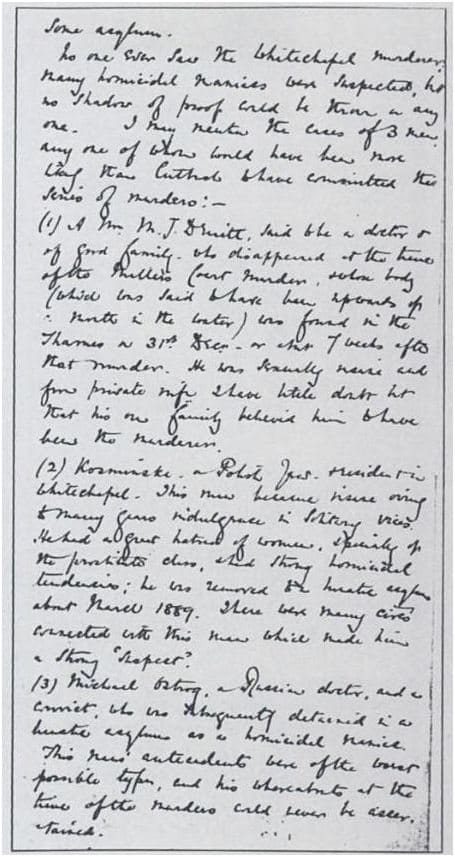
Montague John Druitt was a barrister working as an assistant schoolmaster. His body was pulled from the Thames at the end of December 1888, a few weeks after the last murder, and the timing is the whole of the case against him. Macnaghten wrote that Druitt’s own family believed he was the killer. No one has ever found what they based that on.
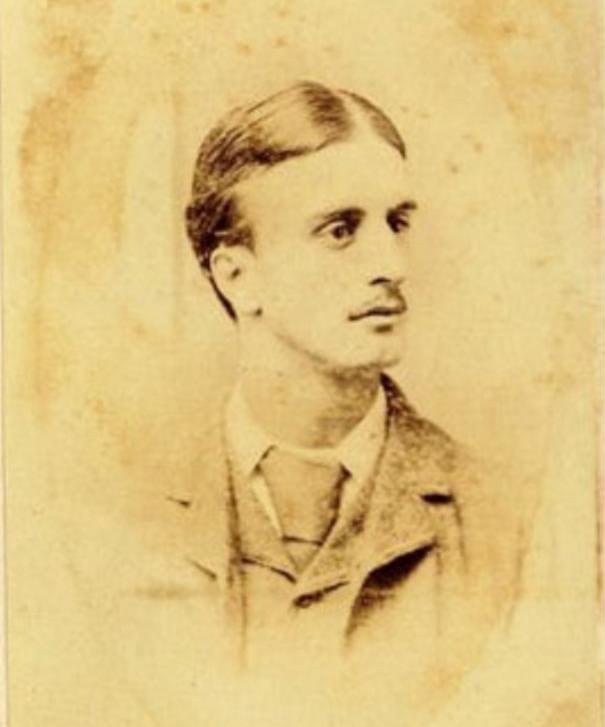
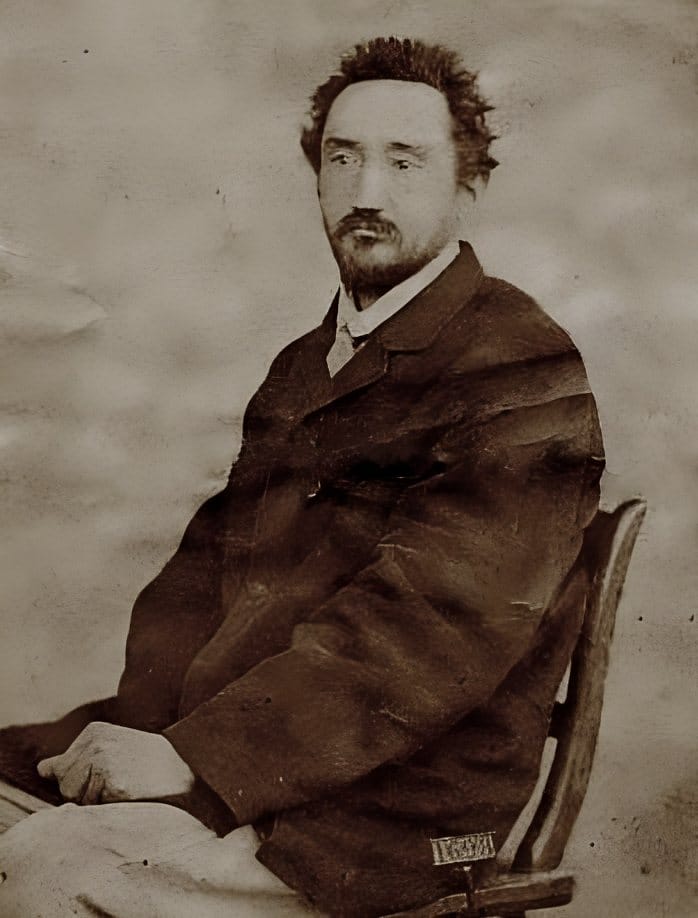
Aaron Kosminski was a Polish Jewish hairdresser living in Whitechapel who was committed to an asylum in 1891. He is the one name that appears in more than one officer’s account: Chief Inspector Donald Swanson wrote in the margin of a book that a suspect had been identified by a witness who then refused to give evidence against a fellow Jew. That is genuinely interesting, and it is also a note scribbled in a margin decades later.
Michael Ostrog was a Russian-born thief and confidence man with a long record. Later researchers found he was in custody in France for part of the relevant period. He is the one suspect who can more or less be ruled out.
Every generation has produced a new answer, usually a book, usually announced as final.
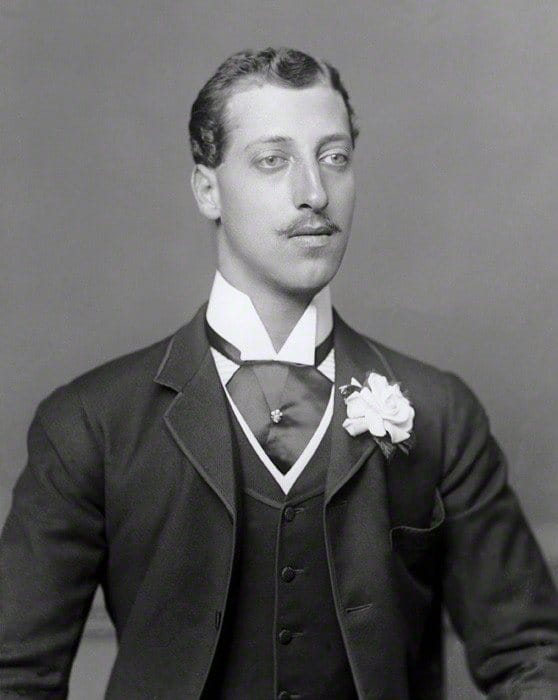
The royal conspiracy has Prince Albert Victor, Queen Victoria’s grandson, either killing the women himself or being covered for by the royal physician Sir William Gull. It is the most popular version because it has been filmed the most. Court circulars place the Prince in Scotland or Norfolk for several of the murders, and Gull was seventy and had already had a stroke.
Walter Sickert, the painter, was named by the novelist Patricia Cornwell across two books. The case rests largely on his paintings and on mitochondrial DNA from letters. He appears to have been in France around the time of at least one killing.
The Maybrick diary, which surfaced in 1992 and appeared to be a confession by a Liverpool cotton merchant, is regarded by most historians as a forgery.
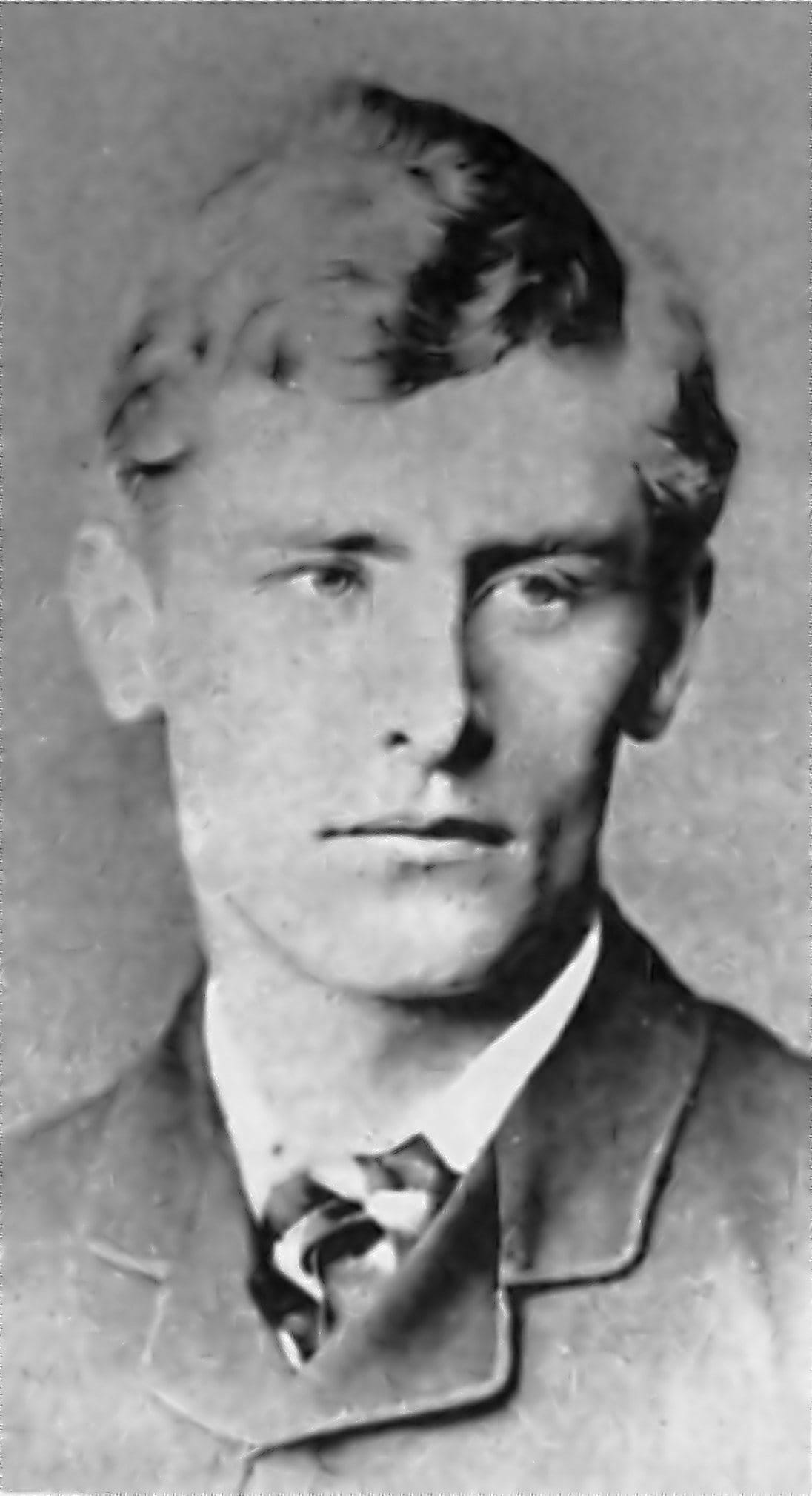
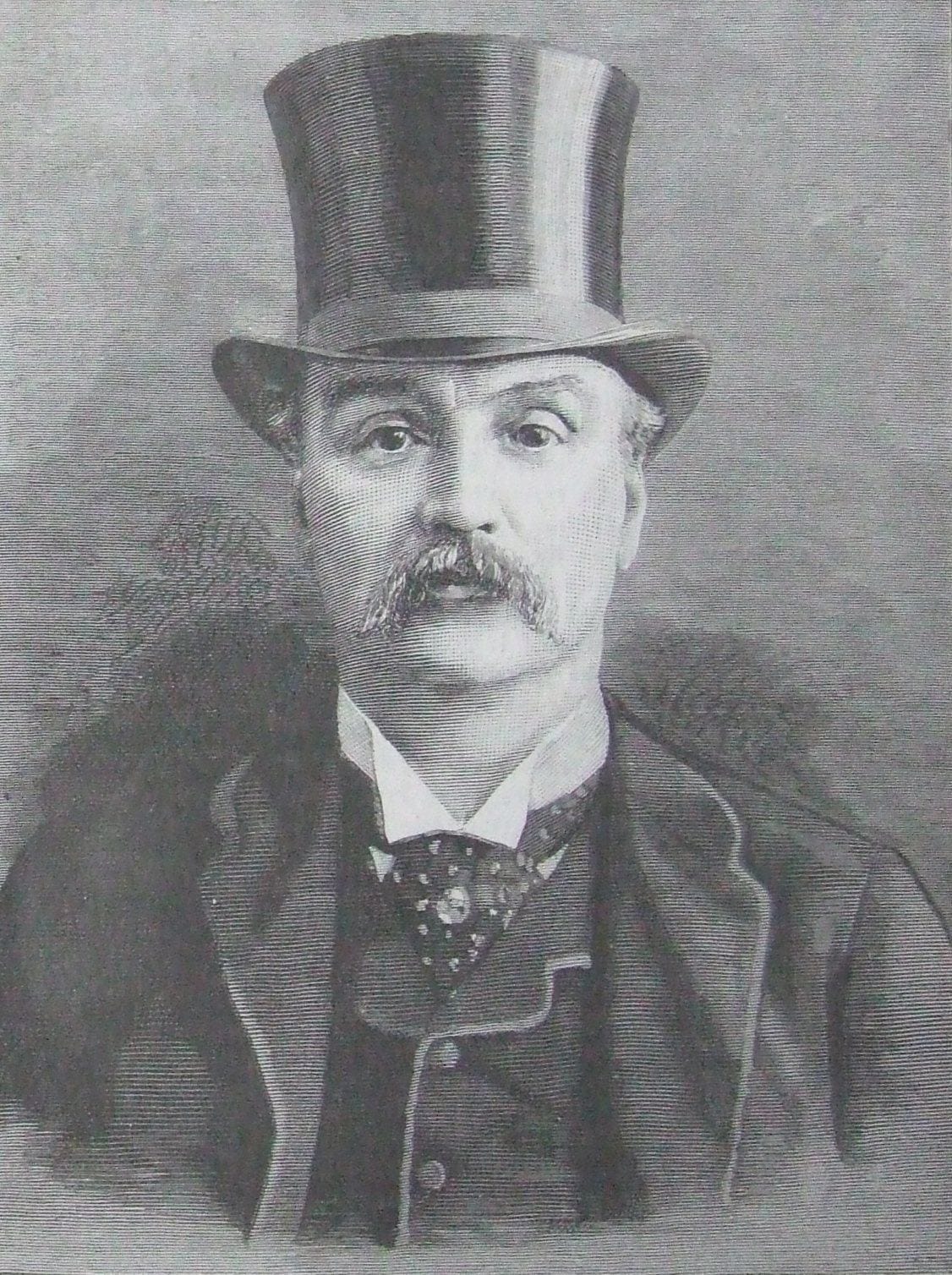
In 2014, and again in a 2019 paper, it was claimed that DNA taken from a shawl said to have come from the Mitre Square crime scene matched Aaron Kosminski. The headlines said the case was solved. It was not, for three reasons.
| The shawl has no provenance | There is no documented chain of custody connecting it to Catherine Eddowes or to Mitre Square |
|---|---|
| It is mitochondrial DNA | That is inherited down the maternal line and shared by large numbers of unrelated people. It can exclude someone. It cannot identify an individual |
| 130 years of handling | The item has been in private hands, displayed and examined repeatedly. Contamination is not a remote possibility, it is the expected state |
None of that proves the shawl is irrelevant. It means the test cannot carry the weight that was put on it.
Not from the killer, in all likelihood. On 27 September 1888 the Central News Agency received a letter signed “Jack the Ripper”, now known as the Dear Boss letter. It was published, the name stuck, and it has shaped the case ever since.
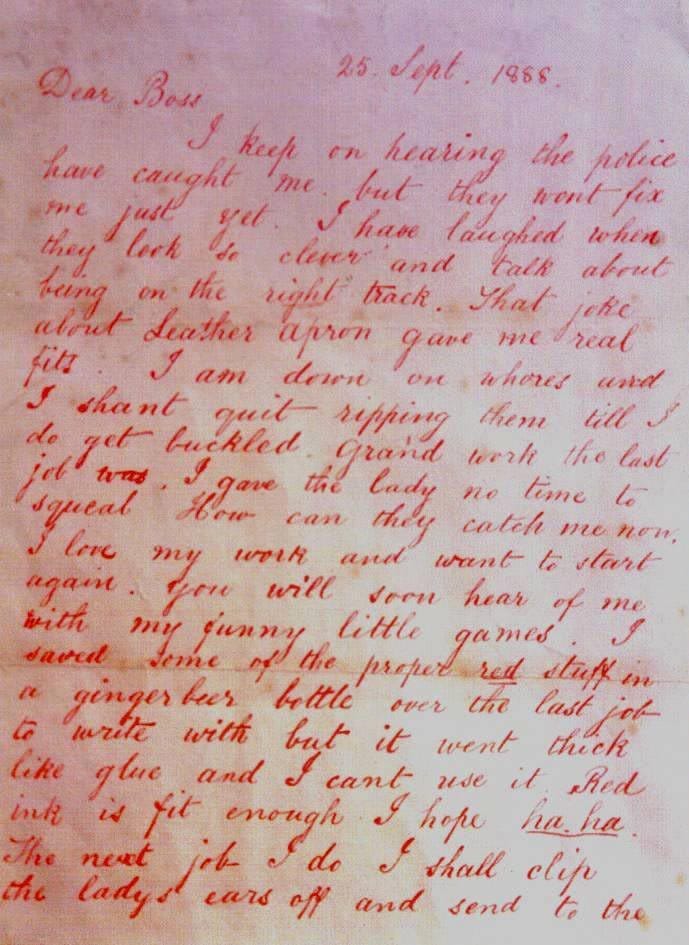
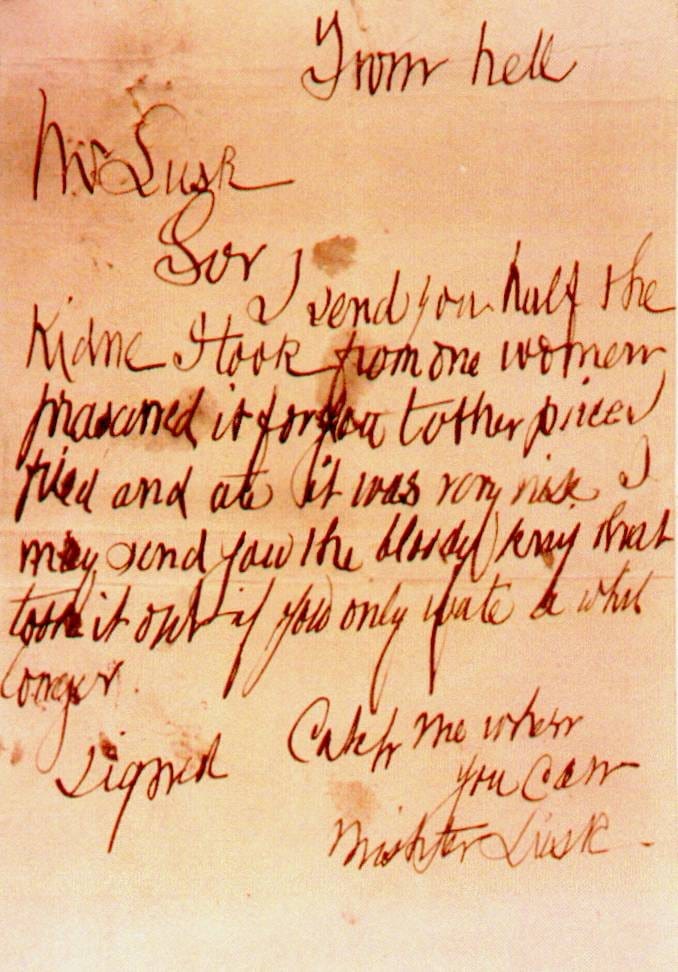
| Dear Boss | 27 September 1888. The first use of the name. Police at the time suspected a journalist wrote it |
|---|---|
| Saucy Jacky | 1 October 1888, a postcard referring to the double event |
| From Hell | Sent to George Lusk of the Whitechapel Vigilance Committee with half a human kidney. Not signed “Jack the Ripper”, and the one most often argued to be genuine |
Hundreds more arrived once the story was national news. Almost all are accepted as hoaxes. It is worth sitting with the oddity of that: the name everybody knows was probably invented by a reporter.
Because nearly every tool that would catch him had not been invented. The Metropolitan Police did not use fingerprints until 1901. Blood groups were not discovered until 1901 either, so blood at a scene could not reliably be shown to be human, let alone matched to a person. There was no DNA, no national criminal database and no way for the two forces working the case, the Met and the City of London Police, to pool what they had.
Add a district of dense courts and alleys, a large transient population, and a press printing rumour as fact, and the investigation looks less incompetent than unequipped.
Inside the investigation, and what the police actually had to work with.
In 1888 the case produced one of the first criminal profiles, written by the police surgeon Thomas Bond. He suggested the killer most likely lived alone, was middle-aged, quiet and unassuming, but prone to periodic attacks of erotic and homicidal mania. Interestingly, Bond also thought the killer had no scientific or anatomical knowledge.
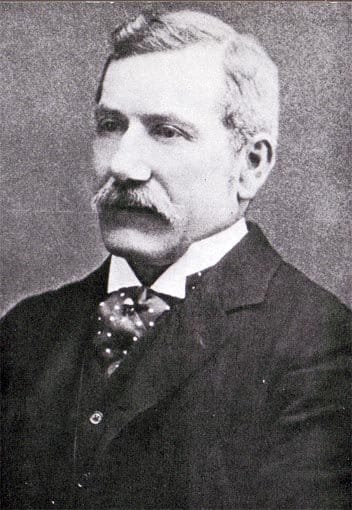
It seems very possible that the killer slipped under the radar and was never suspected at all.
But if we had to name the most likely killer, it would be Aaron Kosminski. He lived locally, suffered from paranoid schizophrenia, and was named as a suspect by senior police officers. He was sent to an asylum in 1891, three years after the murders, for threatening his sister with a knife. Melville Macnaghten, a senior Scotland Yard officer, wrote that Kosminski had strong homicidal tendencies and a great hatred of women. Even so, the modern DNA evidence is flimsy, and there is not enough to build a strong case against him.
The two theories we hear most often on the tour are that it was a police officer, or a high-profile member of the establishment. Both rest on the belief that the murders must have been covered up.
Almost certainly. Not because detectives are cleverer, but because five linked killings in one square mile now produce CCTV, phone data, forensic recovery at the scene and a single coordinated inquiry. The 1888 investigation had a few hundred officers knocking on doors.
The suspect list is where the attention goes, which is why the five women are usually a footnote in their own story. They had names, ages and histories, and four of the five were in their forties, homeless, and killed in the hours when they had nowhere to sleep.
Our Jack the Ripper walking tour covers the suspects and the investigation, and the sites where it happened, without pretending the case is solved.