Visiting the Churchill War Rooms
Most visitors spend about 90 minutes to two hours in the Churchill War Rooms. The visit follows a one-way route through the original wartime rooms, kept much as they were in 1945, with the Churchill Museum part way round.
The rooms are small and the ceilings low, so it helps to know what you’re looking for. Our guides take private groups inside, and this is what we’d tell you before you go: how long to allow, the rooms not to miss, and the details most people walk straight past.
Allow 90 minutes to two hours. Our guided visits spend between an hour and 90 minutes inside, while visitors on their own with the audio guide often take closer to two hours, as the Churchill Museum alone has a great deal to read.
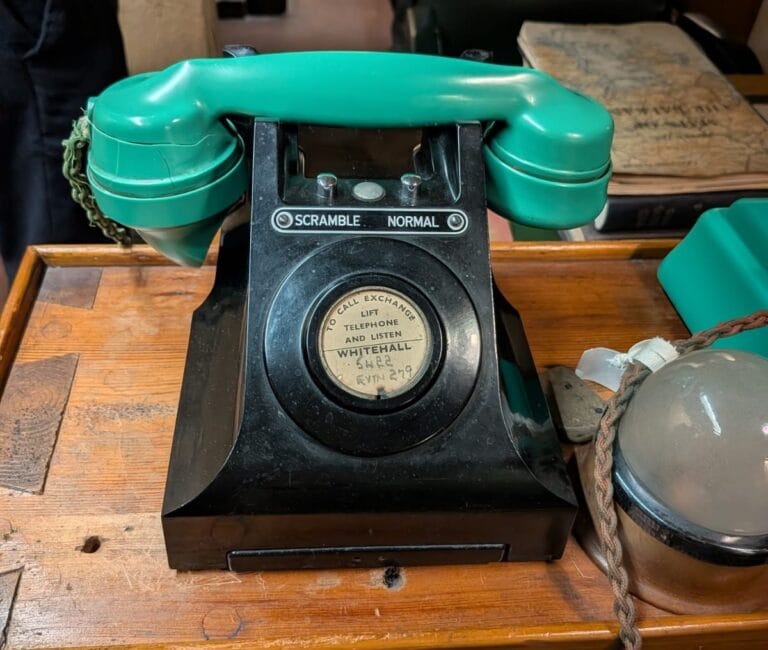
If you only have 45 minutes, spend them in the original Cabinet War Rooms, a perfectly preserved time capsule from the Second World War. That’s enough time for the highlights: the Map Room, the Cabinet Room, Churchill’s bedroom and the Transatlantic Telephone Room (known as Room 63). The kitchen is another remarkably well-preserved room, with original pots and pans donated by the former chef’s granddaughter. If you have time left, head into the Churchill Museum and look for a couple of his personal belongings, including his crushed velvet siren suit and signature Homburg hat, and before you leave, don’t miss the original front door of No 10 Downing Street, which is over 250 years old.
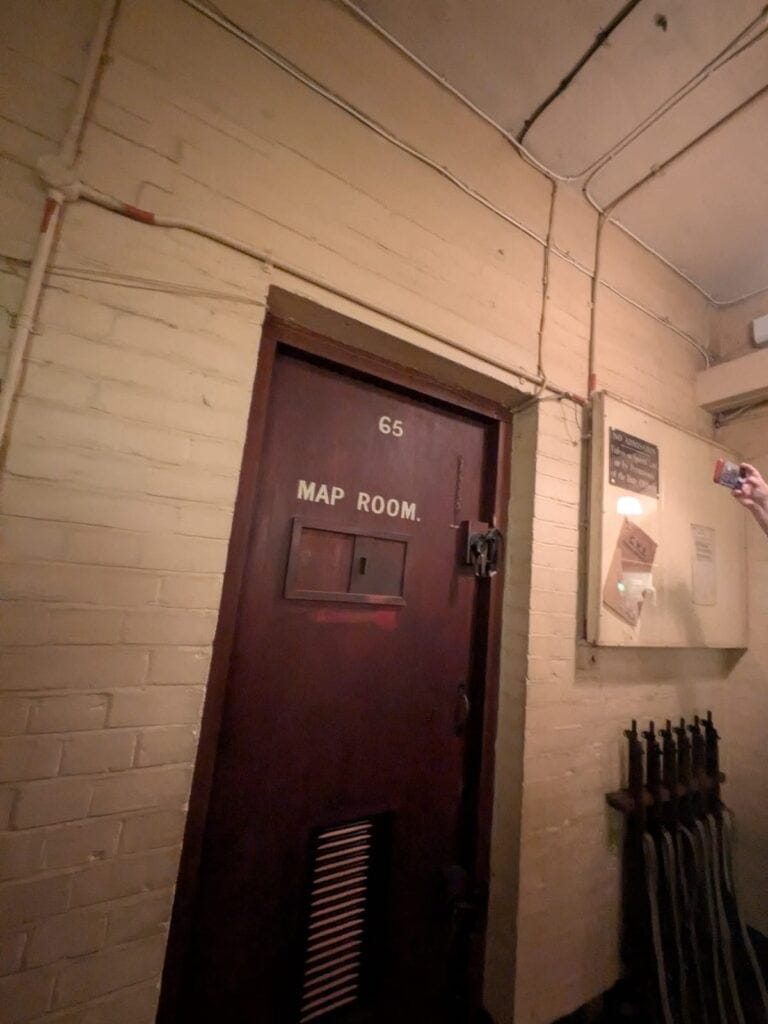
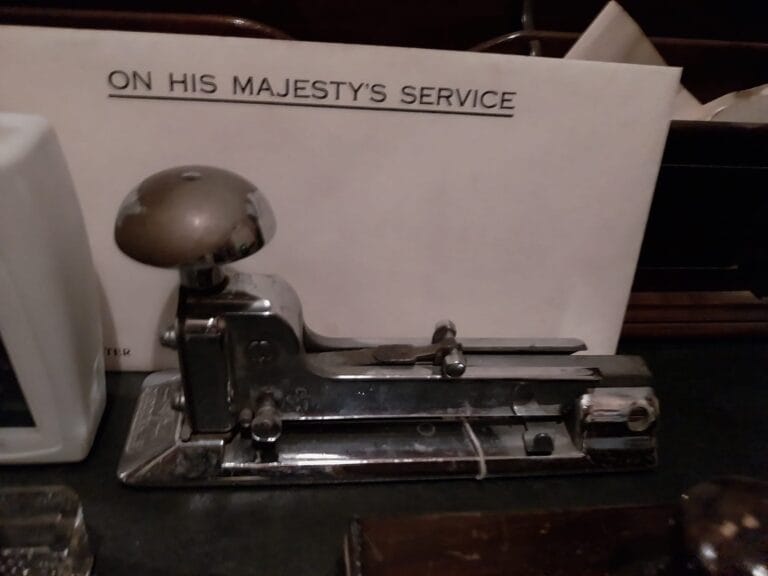
These are the details our guides point out that most visitors miss.
For most visitors, yes. It’s one of the few places in London where you can stand in the rooms used to run the Second World War, kept much as they were, and it is a few minutes’ walk from Big Ben and Westminster Abbey. It suits very young children less well, as the rooms are narrow, busy and serious in tone.
Even if you have only a passing interest in the war, it won’t disappoint. For us, it’s the most incredible museum in London: not a collection of objects from faraway wars, but a time capsule from London’s darkest hour.
Yes, for personal use. You’re welcome to take photos and video, but not with flash or a tripod, and look out for signs in the few places where photography isn’t allowed.
Children are welcome, and under-fives go free. Children aged 10 and over get the most out of it, especially if they’ve studied the war at school. Younger children can still enjoy it with an engaging guide, but the rooms are small and the subject is serious.
On your own, you follow the route with the museum’s audio guide, which is included in the ticket. It covers the main rooms well and lets you go at your own pace. A guide adds what an audio guide can’t: the stories behind the rooms, the details most people miss, and answers to your own questions as you go.
Because the museum allows each guide a maximum of six people, guided visits inside are private. Our private War Rooms museum tour spends 90 minutes inside with your guide. If you’d also like to see wartime Westminster, the private Westminster, WW2 and War Rooms tour adds a 90-minute walk first, and our small group walk with War Rooms entry covers the walk with a guide and then leaves you to explore inside with the audio guide.