Abandoned tube stations London commuters walk past every day are still down there, sealed behind bricked-up doorways and dark tunnels.
Ghost stops. Wartime shelters. Film sets. All hiding in plain sight.
Most Londoners have no idea they exist. And most tourists never find them.
Let’s fix that. Here’s the full story of the disused tube stations under your feet, which ones you can still get inside, and the free trick for spotting them from a moving train.
Why the Underground Has So Many Abandoned Stations
The Tube didn’t grow from a single master plan. It grew from competing Victorian railway companies, each digging their own lines and building stations wherever they thought money could be made.
Some of those bets were wrong.
Bad Locations and Overlapping Lines
Plenty of stations opened too close together. When two lines crossed, one nearby stop often became pointless. Passengers voted with their feet, walked to the busier interchange, and left the smaller station empty.
Others sat on quiet spurs that never attracted the traffic their builders imagined. Running trains to a near-deserted platform costs money, so the numbers stopped adding up.
Wartime and Modernisation
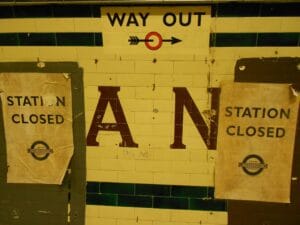
The First and Second World Wars changed everything. Several closed stations found new purpose as bomb shelters, storage vaults and secret offices.
After WW2, upgrades sealed the fate of others. New lifts, longer trains and rerouted lines made the old stops redundant. If you’ve ever wondered why the London Underground feels so confusing to use, this messy, patchwork history is a big part of the answer.
Aldwych: London’s Most Famous Ghost Station
If you only learn one of the abandoned tube stations London has to offer, make it Aldwych. It’s the poster child of the ghost stations London Underground fans obsess over.
From Strand to Aldwych: A Station That Was Never Quite Needed
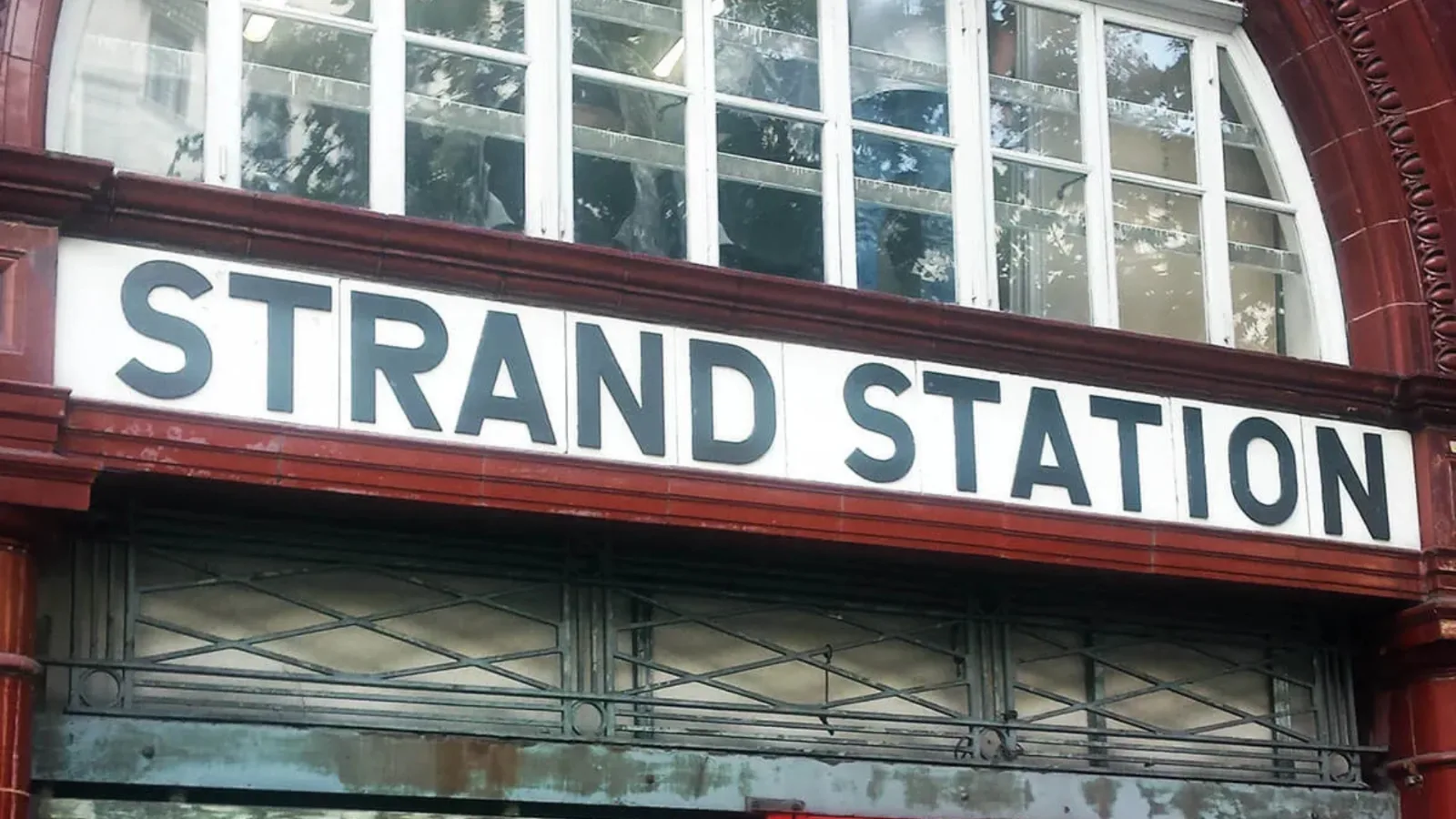
Aldwych opened in 1907 as a short spur off the Piccadilly line. It was originally called Strand.
The station was renamed Aldwych in 1915. Trouble was, it never pulled the crowds. Sitting on a stub line that went almost nowhere useful, it limped along for decades on light traffic.
It finally closed to passengers in 1994. The cost of replacing its ageing lifts simply couldn’t be justified for so few travellers.
Its Wartime Role
Here’s where Aldwych earns its place in history. During the Blitz, its disused tunnel became a strongroom for priceless artworks evacuated from the British Museum and the V&A, including the Parthenon (Elgin) Marbles.
From October 1940, it also sheltered ordinary Londoners. Up to 1,500 people a night slept on those platforms while bombs fell above.
That detail turns a quiet failed station into something far more moving. People survived down there.
Why It’s a Filming Location Favourite
Because trains stopped running so late, Aldwych kept its original platforms, ticket hall and lifts almost intact. That makes it a dream for film and TV crews.
It has doubled for countless other Tube stations on screen. If a movie needs a period Underground scene, there’s a fair chance it was shot here. Our deeper look at what it’s really like inside the disused Aldwych station covers more of these hidden details.
And if you want to see Aldwych station’s iconic Grade II listed exterior and hear more about the station on a walking tour, plus other incredible secret history lying beneath our feet, check out our Hidden London Tour.
Other Abandoned Tube Stations London Hides in Plain Sight
Aldwych gets the headlines. But it’s far from alone. Several other disused tube stations sit just below street level, some with clues still visible above ground.
Down Street: Churchill’s Secret Wartime HQ
Down Street closed in 1932. Wedged between Green Park and Hyde Park Corner, it lost out to busier neighbours and low passenger numbers.
Then war gave it a second life. Before the Cabinet War Rooms were ready, Churchill and the War Cabinet used Down Street as a protected underground headquarters.
Deep, reinforced and secret, it was one of the safest addresses in wartime London. If you’re drawn to that era, our piece on Churchill’s secret bunkers and shelters beneath WW2 London picks up the story.
British Museum Station
British Museum station opened in 1900 and closed in 1933. Its downfall was Holborn, a short walk away, which grew into a major interchange.
Once Holborn expanded, British Museum became pointless. Passengers had a bigger, better-connected station right next door, so it quietly shut for good.
York Road
York Road is one of the more visible ghost stations. Though closed for passengers long ago, its surface building survives on York Way.
Look up and you can still read the original lettering on the old façade. It’s a rare case where an abandoned station wears its history on the outside.
Spotting Them from the Train
You don’t need a ticket to see disused tube stations. You just need a window seat and quick eyes.
On the Piccadilly line between Green Park and Hyde Park Corner, watch for Down Street’s bricked-up platforms flashing past. On the Northern line between Angel and Old Street, look for the old City Road platforms in the gloom.
Blink and you’ll miss them. But once you know where to look, you’ll never un-see them.
Can You Actually Visit Them
This is the question everyone asks. So here’s the straight answer, no fluff.
The Honest Answer
You cannot just wander into these places. Physical access to stations like Aldwych and Down Street is only possible through official Hidden London tours run by the London Transport Museum.
These are ticketed, they run on set dates, and they sell out fast. If getting inside matters to you, book well ahead directly through the museum’s own website, and check current availability before making travel plans, because their schedule changes each year.
What Fun London Tours Offers Instead
We’ll be honest with you. We don’t take groups down into sealed tunnels, and we’d never pretend to.
What we do is tell the stories from street level. The wartime secrets, the failed lines, the ghost stations London Underground history is packed with, all woven into our London walking tours across the city.
Think of it this way. The London Transport Museum tours get you inside a station. Our walks give you the wider context, from Churchill’s war to London’s hidden corners, without the sold-out ticket scramble.
Tips for Underground History Enthusiasts
You don’t need deep pockets to enjoy the abandoned tube stations London keeps beneath its streets. Some of the best ways cost nothing at all.
Best Free Ways to Spot Ghost Stations
Grab a window seat and become a ghost-station hunter. British Museum on the Central Line and City Road on the Northern line are your easiest wins.
Time your glimpse. The gaps between stations are short, so keep your eyes on the tunnel walls rather than your phone. No booking, no fee, just a sharp eye.
At street level, hunt for old station façades like York Road’s. Once-grand entrances, now flats, shops or blank frontages, hide all over the capital.
Further Reading and Related Stories
Want to go deeper on a single station? Our full account of the disused Aldwych station and its wartime past is the place to start.
For a different flavour of Tube history, watch a Metropolitan line locomotive travelling through Farringdon Underground. It’s a reminder of just how old parts of this network really are.
Where This Fits Into a Wider London Trip
Ghost stations rarely fill a whole day on their own. They work best as one thread in a bigger London story.
Pair your spotting with a themed walk. The wartime tunnels of Down Street sit naturally alongside our WW2 and Churchill history walks, while curious travellers might prefer ten hidden gems most visitors miss.
The disused tube stations London commuters ignore are proof of one thing. This city is layered with history, and the best bits are often the ones hiding just out of sight.
Ready to hear these stories told out loud on the streets above? Browse our London history walking tours and pick the era that grabs you most.