Trafalgar Square in London has plenty to fill an afternoon. Street performers draw crowds, the galleries are free to wander in and out of, and the steps by the National Gallery are one of London's best spots for lunch with a view.
But even if you’ve been many times, you’ve probably walked past some of its best details. As one of the country's most photographed public spaces, it’s full of things hiding in plain sight: a police station the size of a phone box, a nose on a royal arch, a Victorian ruler fixed to a wall.
Our guides meet walking groups at this exact spot, and the pattern never changes. People walk straight past the best bits.
Here are 11 of them, each with a precise location so you can find them yourself.
1. The Charles I Statue and the Centre of London
Start at the southern edge of Trafalgar Square in London, where King Charles I sits on horseback looking down Whitehall.
That gaze isn’t random. He faces towards Banqueting House, outside which he was executed in 1649.
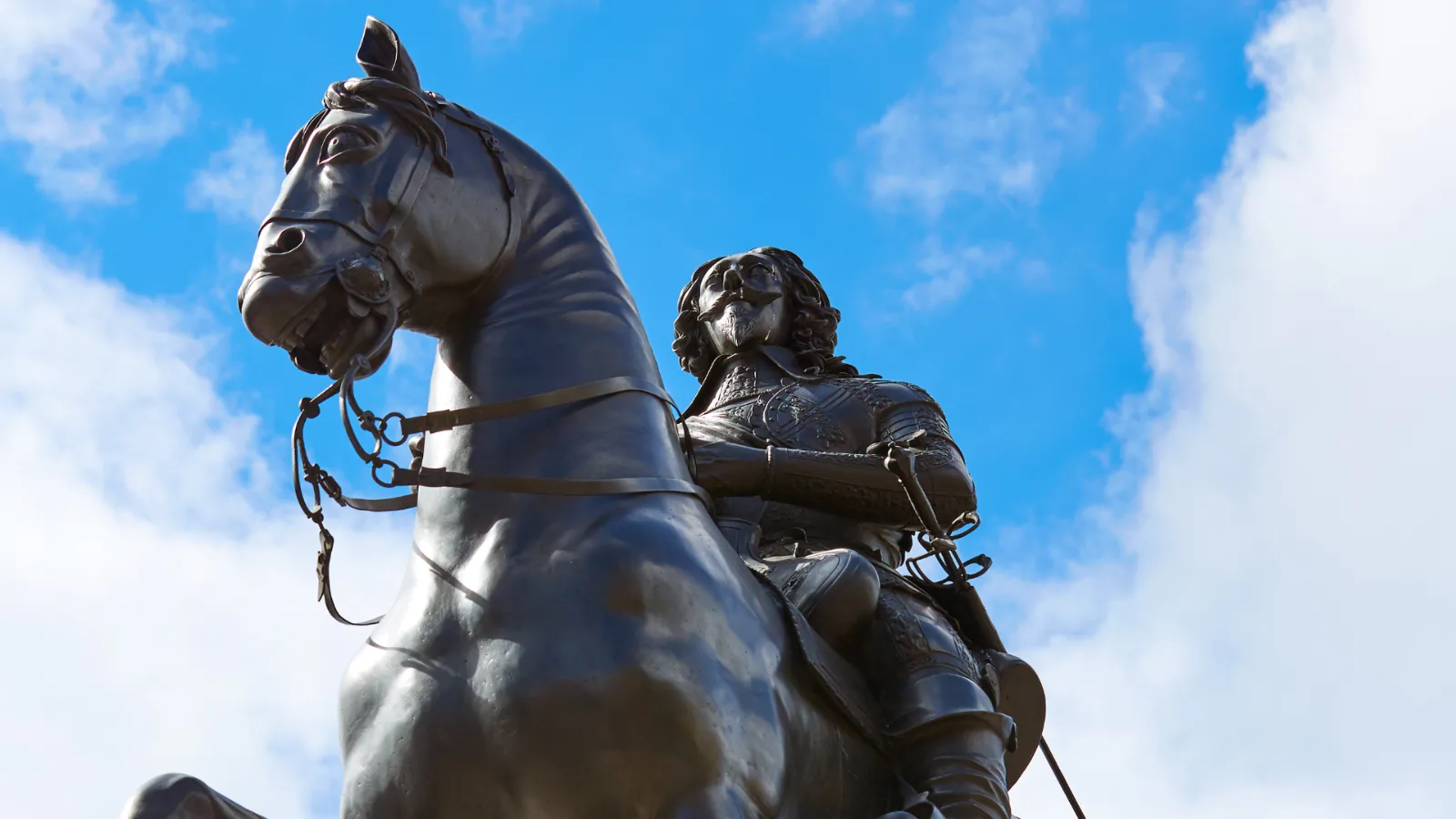
Cast in the 1630s by the French sculptor Hubert Le Sueur, the statue had a rough few decades. Parliament wanted it destroyed during the English Civil War (1642 to 1651). The story goes that a metalworker called John Rivet was told to melt it down, hid it instead, and sold “souvenirs” supposedly made from the metal. The statue resurfaced after the monarchy returned in 1660 and went up on this spot in the 1670s, around two decades after it should have been scrap.
It's also where our Secret London Tour begins.
Why Distances to London Are Measured From Here
Behind the statue, a small plaque set into the pavement marks the original site of the Charing Cross.
When a road sign tells you London is 50 miles away, that figure traditionally counts to this point. Not the City, not St Paul's, not the geographic middle. The convention is far older than the motorway network, and it stuck.
How the Square Got Its Name and Shape
Before it was a square, this patch was the King's Mews, where royal hawks and later horses were kept. "Mews" originally meant a place for moulting hawks, which is why so many London back streets carry the word.
Charing Cross takes its name from the last of the crosses Edward I raised in the 1290s to mark the funeral procession of his wife, Eleanor of Castile. Parliament pulled it down in the 1640s. The ornate cross outside Charing Cross station today is a Victorian replica, a short walk from the original site.
A folk tale says "Charing" comes from chère reine, French for "dear queen". It’s a lovely idea, but the name is actually older than the cross and is usually traced to an Old English word for a bend, probably the bend in the Thames.
The square itself was laid out in the 1830s and 1840s, largely to the design of architect Charles Barry, best known for rebuilding the Houses of Parliament, and named after Nelson’s victory over the French and Spanish fleets in 1805.
Trafalgar is the cape off southwest Spain where the battle was fought, a name usually traced to Arabic, though scholars disagree on whether it meant "cape of the cave" or something closer to "western cape". That's Trafalgar Square history in four sentences; the rest of this list fills in the details.
2. The Corner Police Box
Walk to the south-east corner and look at the round stone pillar topped with a lamp. Notice the door?
Meet the police box, once described as Britain's smallest police station. It's hollow, with narrow slit windows, and it fits roughly one officer and not much else.
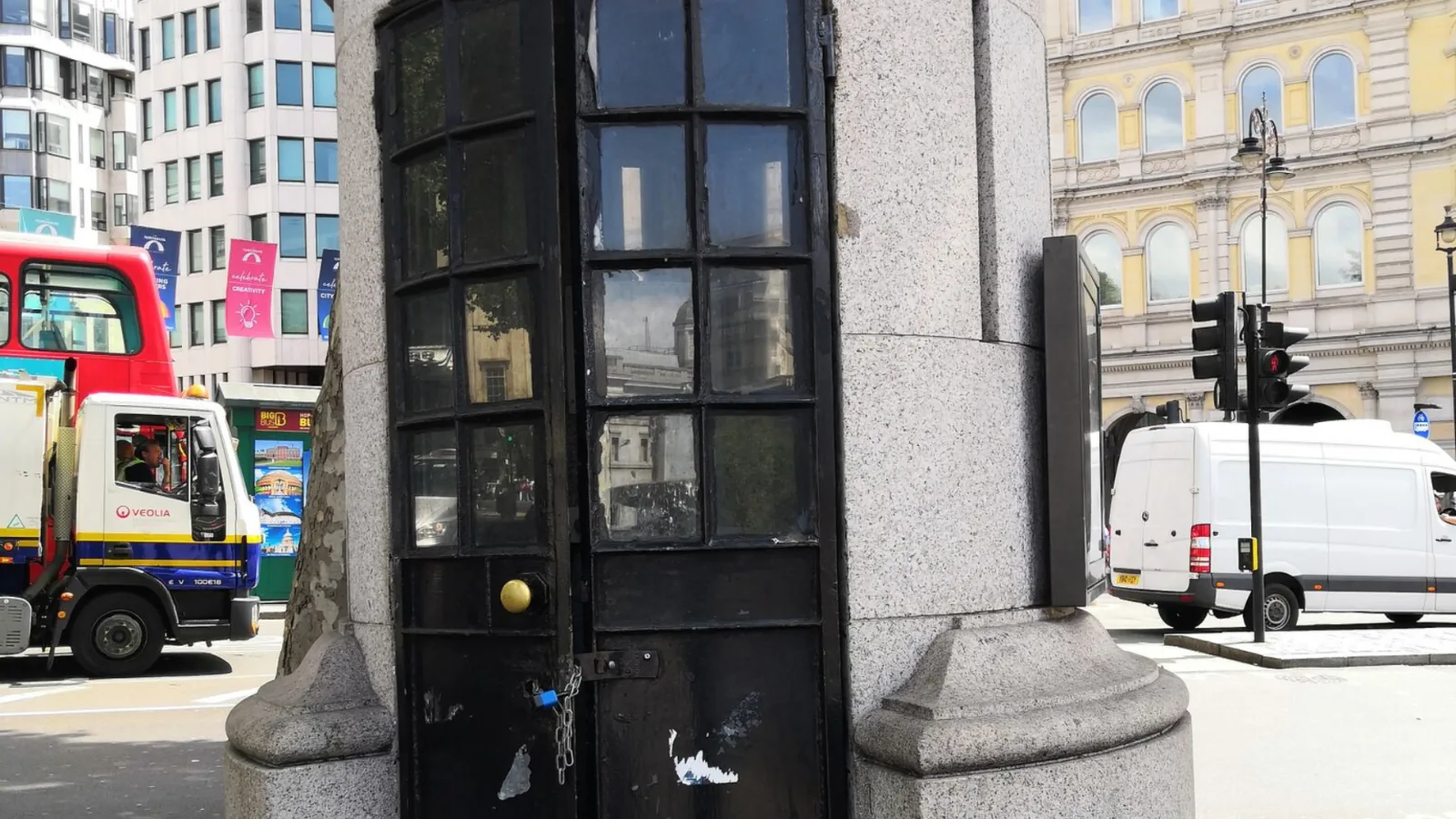
Type "Trafalgar Square London" into an image search and you'll get endless Nelsons and lions. It rarely makes it into anyone’s holiday photos, which makes it a great one to add to yours.
How to Find It
The box is built into the corner of the square's outer balustrade, to your right, on the side towards the Strand. Our guides love watching groups walk right past it before pointing it out.
What It Was Actually For
The box dates from the 1920s and gave police a discreet lookout over a square that regularly filled with demonstrations. It had a direct telephone line to Scotland Yard, and the lamp on top would flash when someone picked up the phone, alerting nearby officers.
These days the box is used for storage, not policing.
3. Landseer's Lions
Four bronze lions guard the base, and they're the square's most photographed residents. They're also latecomers.
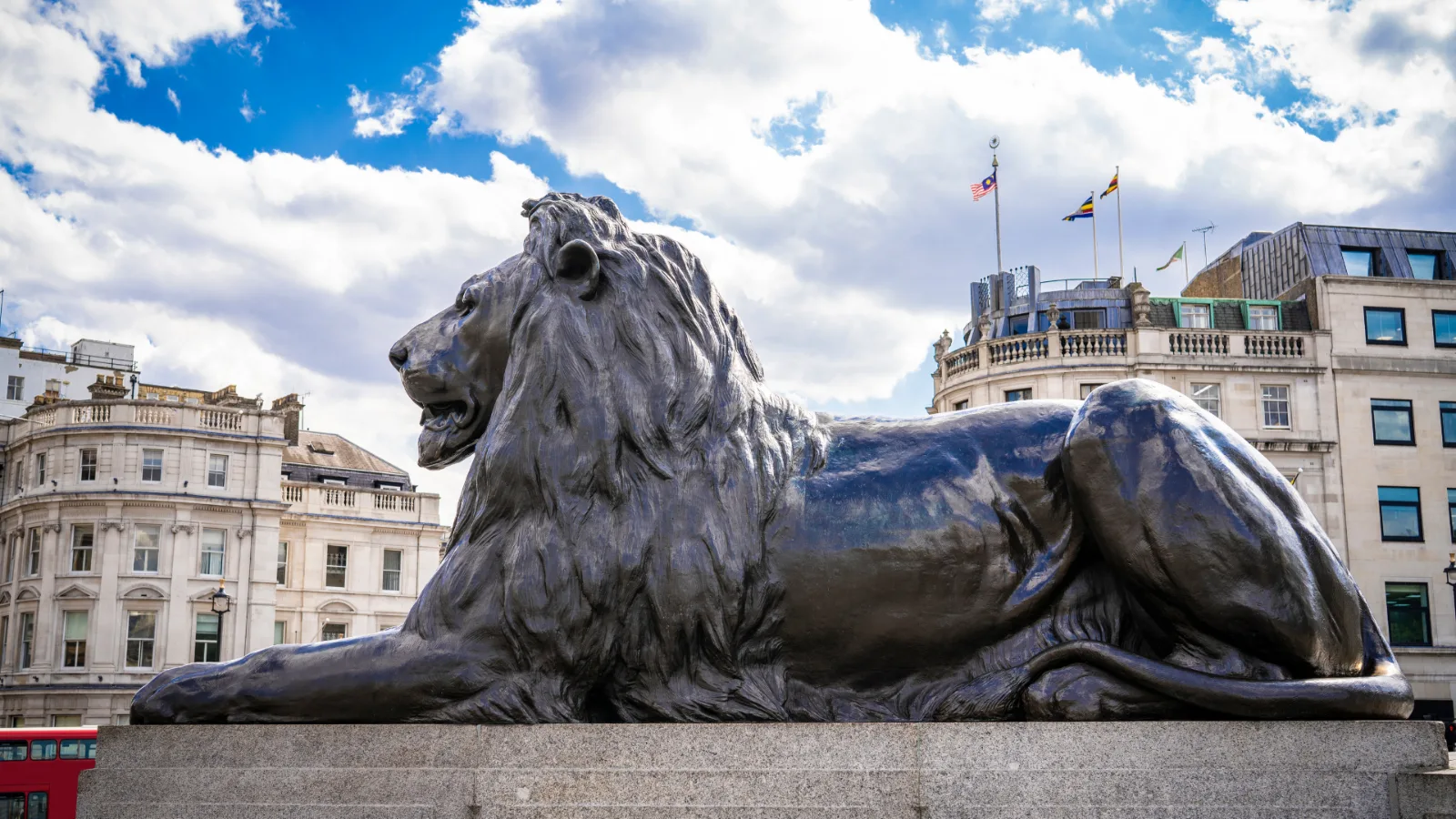
They were designed by Sir Edwin Landseer, a painter far better known for animals on canvas (stags, dogs, horses) than for sculpture.
Tempting as it is, climbing them is discouraged, and the bronze gets slippery in the rain. They look just as good in a photo from the ground.
Why They Came Late
Work on the column finished in the early 1840s. The lions only arrived in 1867, more than 20 years later.
Money, committee wrangling and a slow-working artist all played a part. Landseer took years to complete the commission, and the foundry of sculptor Carlo Marochetti handled the casting.
4. Nelson's Column and Its Bronze Reliefs
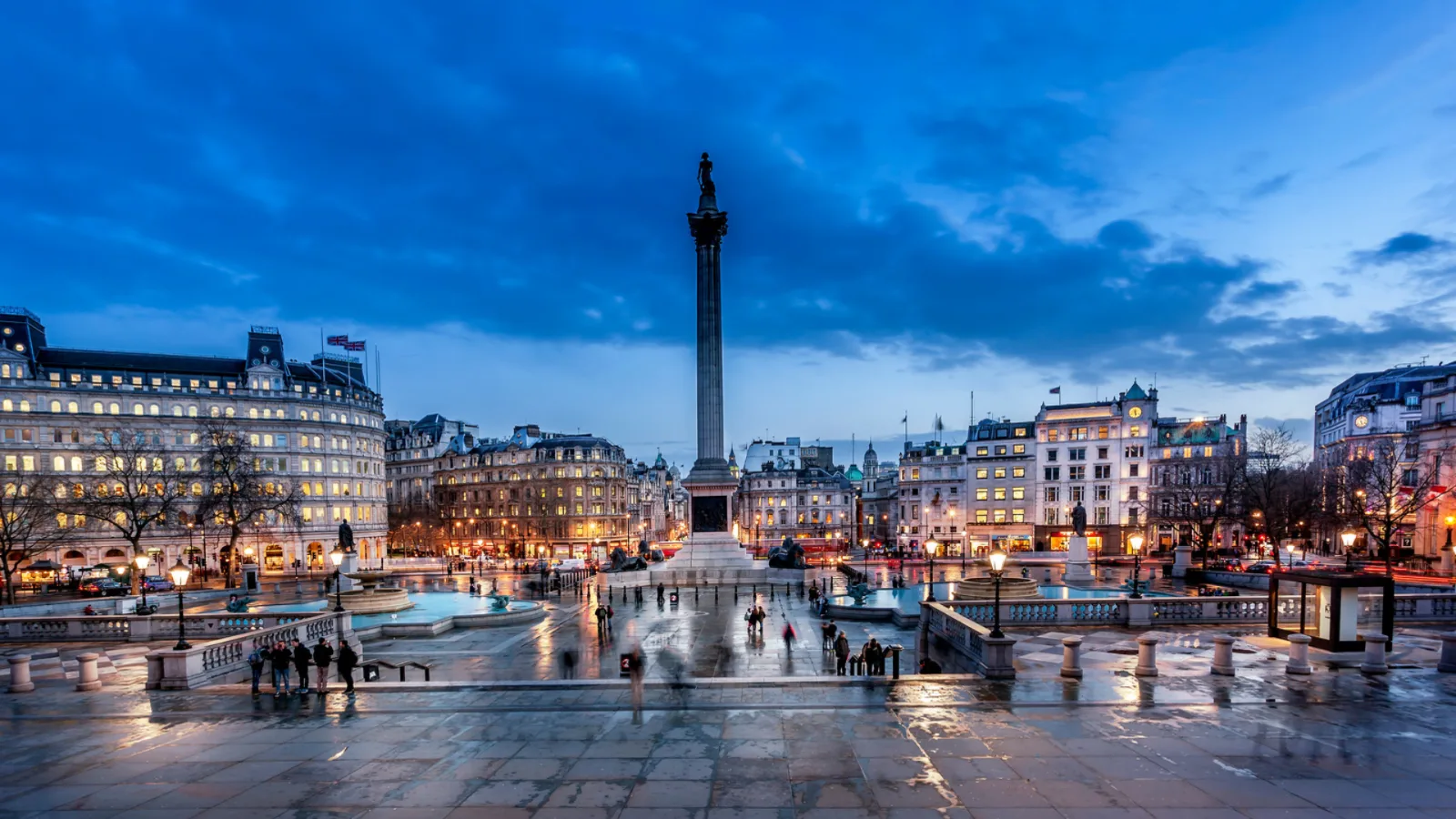
Whose statue is on Trafalgar Square in London? The headline answer is Admiral Horatio Nelson, who died winning the Battle of Trafalgar in 1805 and stands on top of Nelson's Column, built in his honour in the early 1840s.
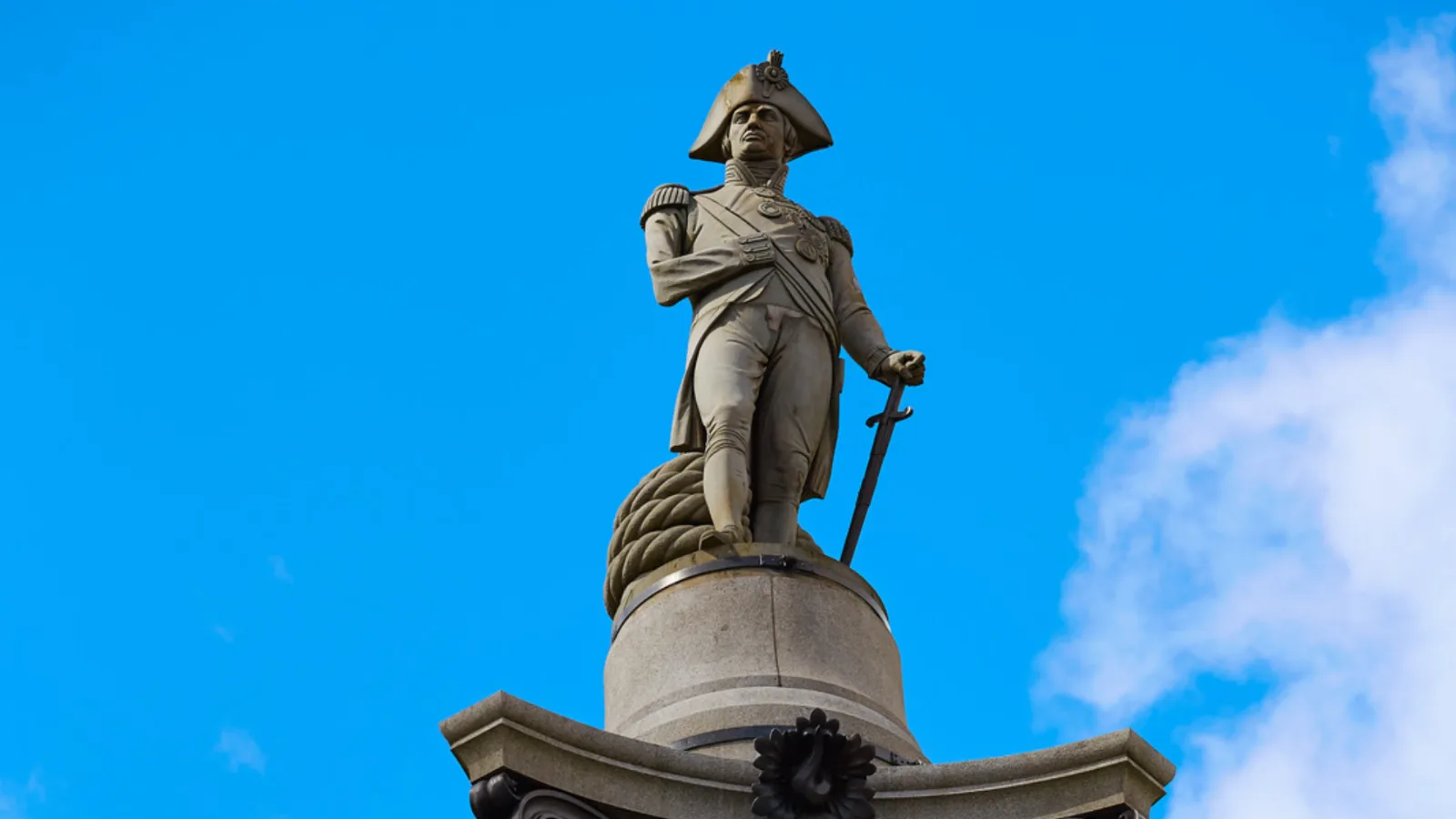
Dig a little deeper and the cast list grows. Charles I to the south, George IV on the north-east plinth, George Washington and James II outside the National Gallery, generals Henry Havelock and Charles Napier on the southern plinths, and three admirals on the north wall.
Nelson gets all the attention, but some of the best details are at eye level. Around the base of the column, four bronze reliefs show the battles that made his name: Cape St Vincent, the Nile, Copenhagen and, facing Whitehall on the south side, Trafalgar itself, where Nelson is shown dying on the deck of HMS Victory. The bronze is said to have come from captured French cannon, so it’s fitting that they now celebrate the man who beat them.
Walk all the way round to see each one. Most visitors only spot the side they happen to be standing on.
5. The Fountains as First World War Memorials
Splashing away in front of the north wall, the two fountains look purely decorative, but there’s more to them than meets the eye.
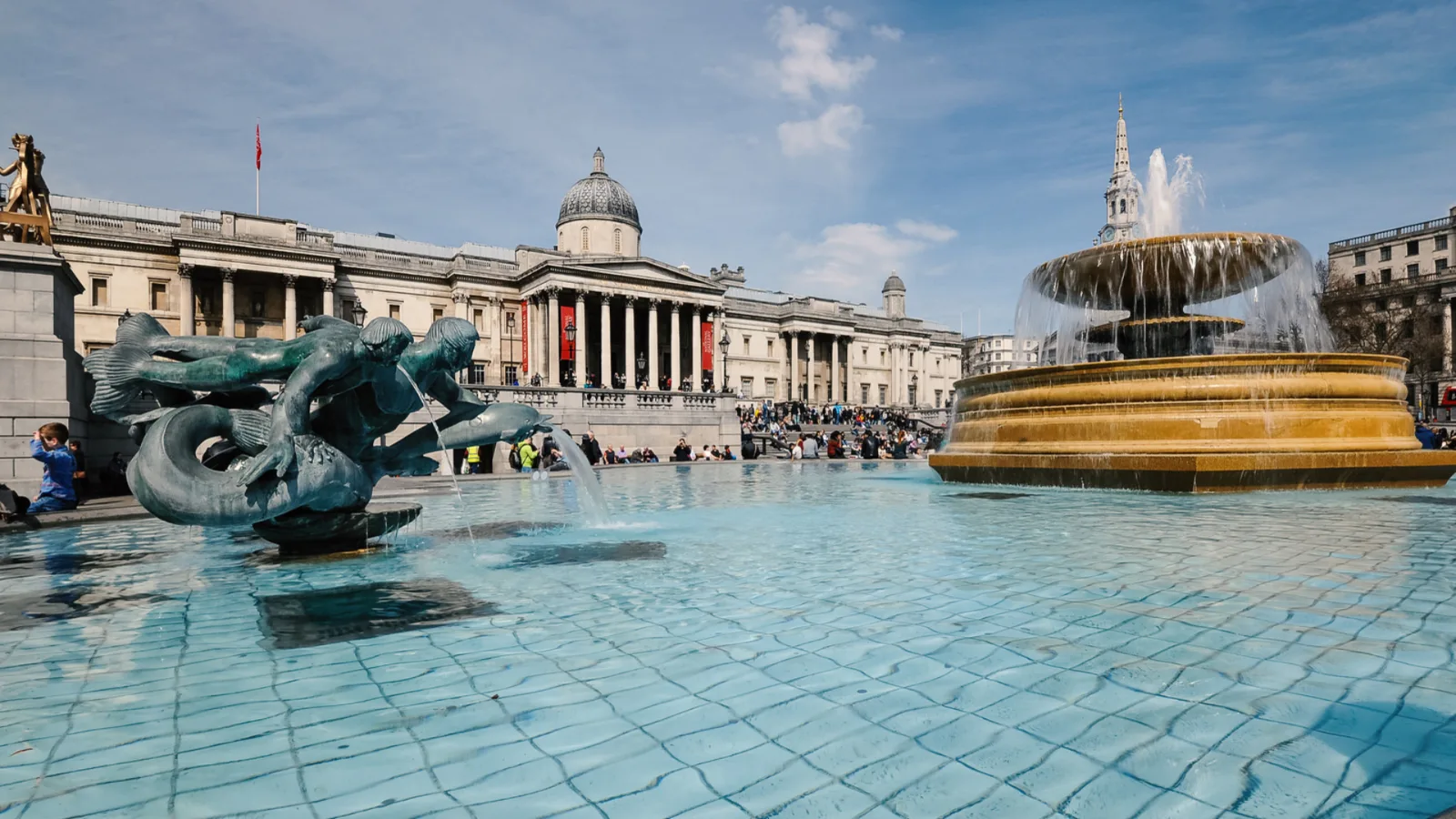
Sir Edwin Lutyens, architect of the Cenotaph, designed today's fountains, which serve as memorials to Jellicoe and Beatty, the First World War admirals whose busts sit behind them.
Earlier fountains stood here from the 1840s. When they were replaced, they shipped the originals to Canada, where they survive.
Who They Commemorate
Planning began in the late 1930s, but war got in the way. The fountains weren't formally unveiled until 1948, which gives them an odd double meaning: memorials to one war, finished in the shadow of the next.
Best Time to Stop and Look
Come early. On a weekday morning, before the coach groups arrive, the square is calm, and the light is soft.
After dark, the fountains are sometimes lit, and the whole square feels quieter and more theatrical. A good finale after a West End show.
6. The Admirals' Busts on the North Wall
Turn your back on Nelson and face the north wall below the National Gallery. Three bronze heads sit there, almost apologetically.
They're Admirals Jellicoe, Beatty and Cunningham, and they’re some of the most overlooked monuments in central London. Plenty of people enjoy their lunch right beneath them without realising who’s there.
Two of them are also remembered by the fountains in front, which we'll come to next.
Who Were the Three Admirals
-
John Jellicoe commanded the Grand Fleet at the Battle of Jutland in 1916, the biggest naval clash of the First World War.
-
David Beatty led the battlecruisers at Jutland and later became First Sea Lord.
-
Andrew Cunningham was the Royal Navy's leading commander in the Mediterranean during the Second World War and later served as First Sea Lord.
Jellicoe and Beatty's busts arrived after the Second World War, alongside the new fountains. Cunningham joined them in the 1960s.
Where to Find the Busts
Scan the north wall below the terrace, behind the fountains. Once you've spotted them, you’ll start noticing them every time you visit.
7. The Imperial Measurements on the North Terrace
On the north side of Trafalgar Square, at the bottom of the steps, sits one of the oddest things in Trafalgar Square: brass plates marking the official imperial measurements of length.
Inch. Foot. Yard. Each is marked out between brass studs, alongside a few longer measures.
Installed in the 1870s, they've outlived the road that once ran in front of the National Gallery before it was pedestrianised in the early 2000s.
Spotting Them Yourself
Find the central staircase linking the main square to the north terrace. The standards are set into the ground and run from the statue of King George IV to the Fourth Plinth.
8. George IV on the North-East Plinth
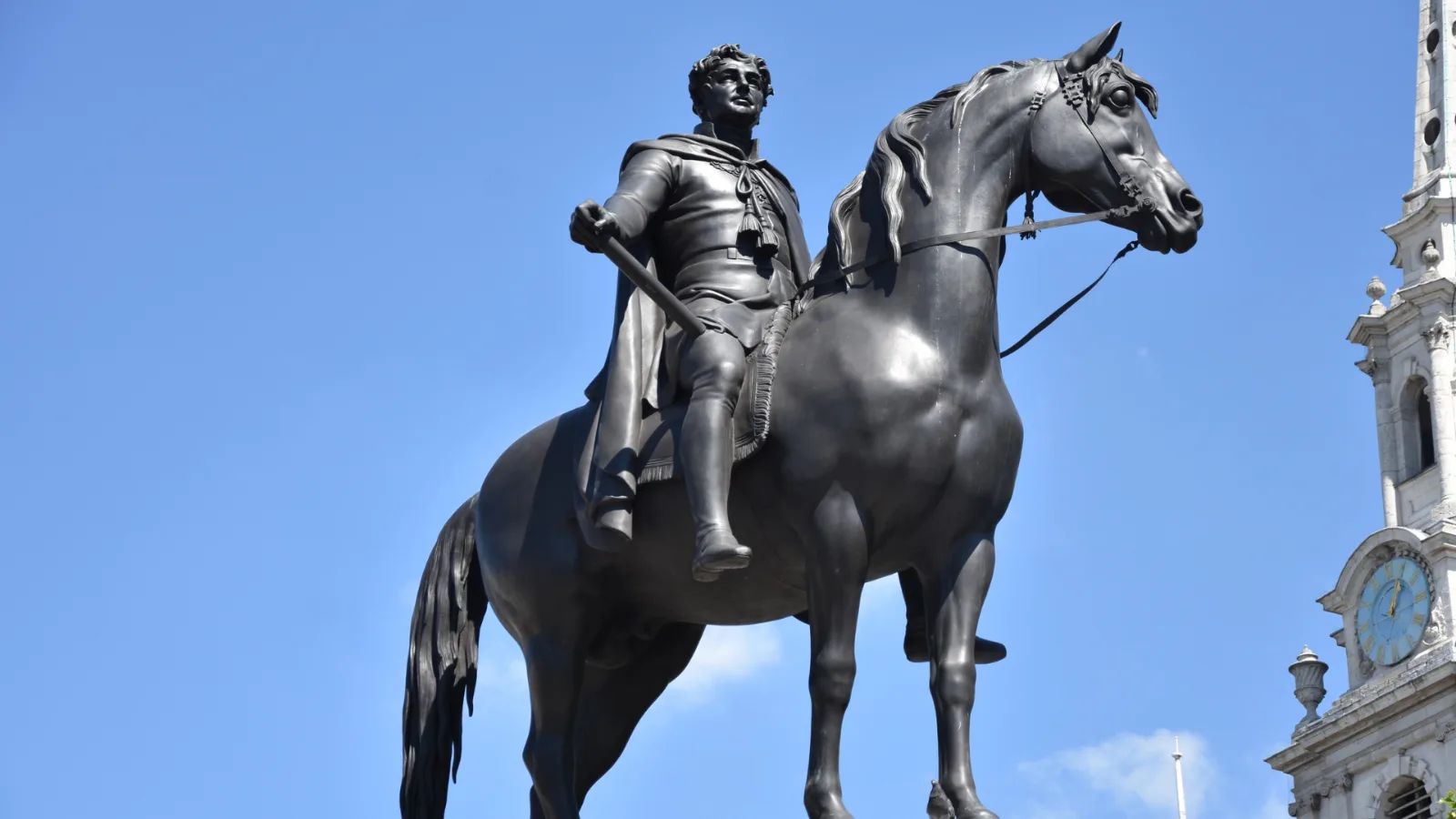
In the north-east corner, King George IV rides a horse without stirrups, dressed more like a Roman emperor than a Georgian king.
He also looks slightly out of place. With good reason.
A Statue Meant for Somewhere Else
Sculptor Francis Chantrey originally intended the statue to top Marble Arch, which then stood in front of Buckingham Palace. Plans changed; Marble Arch later moved to its current spot near Hyde Park, and George IV was placed on this plinth in the 1840s, supposedly as a temporary measure.
Nearly two centuries later, he's still here. Temporary, London style.
The Fourth Plinth and Its Contemporary Art Commissions
Glance diagonally across to the north-west corner. That plinth was built for an equestrian statue of William IV, but the money ran out, and it stood empty for well over a century.
That's the fourth plinth, and since 1999 it has hosted rotating contemporary art, making it the most talked-about artwork in Trafalgar Square.
What's on the fourth plinth now? Works usually change every couple of years, so check the Mayor of London's Fourth Plinth programme for the current 2026 commission and what's next, and see our pick of the best sculptures in London for more public art worth hunting down.
9. George Washington Outside the National Gallery
George Washington stands on the grass in front of the National Gallery. An American founding father, in a square named after a British naval victory. Odd? A bit.

The Virginia Soil Story
Washington is supposed to have vowed never to set foot on British soil again. So, the story goes, they placed soil from Virginia beneath the statue so he could keep his promise.
Is it true? The tale is repeated everywhere, but solid documentation for both the vow and the soil is thin. Enjoy it as a story, not as a fact you'd bet on.
An American in Trafalgar Square
Virginia gave the statue in 1914, but it arrived in 1921. It’s a bronze copy of Jean-Antoine Houdon’smarble original in Richmond, and it commemorates 100 years of peace between the US and the UK
Placed among kings and admirals, he's a neat reminder that old enemies can become allies.
10. The Pigeons That Aren't There
Older visitors remember a square carpeted in pigeons, with seed sellers doing a roaring trade and tourists posing with birds on their heads.
Today? Far fewer.
Why Feeding Was Banned
Mayor Ken Livingstone's administration saw the birds as a health and cleaning problem, with droppings damaging the stonework. The last licensed seed seller was moved on, and in 2003 a byelaw made feeding pigeons in the square an offence.
Enforcement leans on deterrence as much as fines. Harris hawks are flown over the square to stop the pigeons settling, which turns plenty of heads.
What Visitors See Today
Fewer birds, cleaner stone and more room for events. Sit on the steps with a sandwich, and you'll still attract the odd hopeful pigeon, but feeding them is off the menu.
11. The Duke of Wellington's Nose at Admiralty Arch
Head to Admiralty Arch, the triple archway in the south-west corner that leads onto The Mall. Completed in 1912 as a memorial to Queen Victoria, it's grand, imposing and, if you look closely, slightly ridiculous.
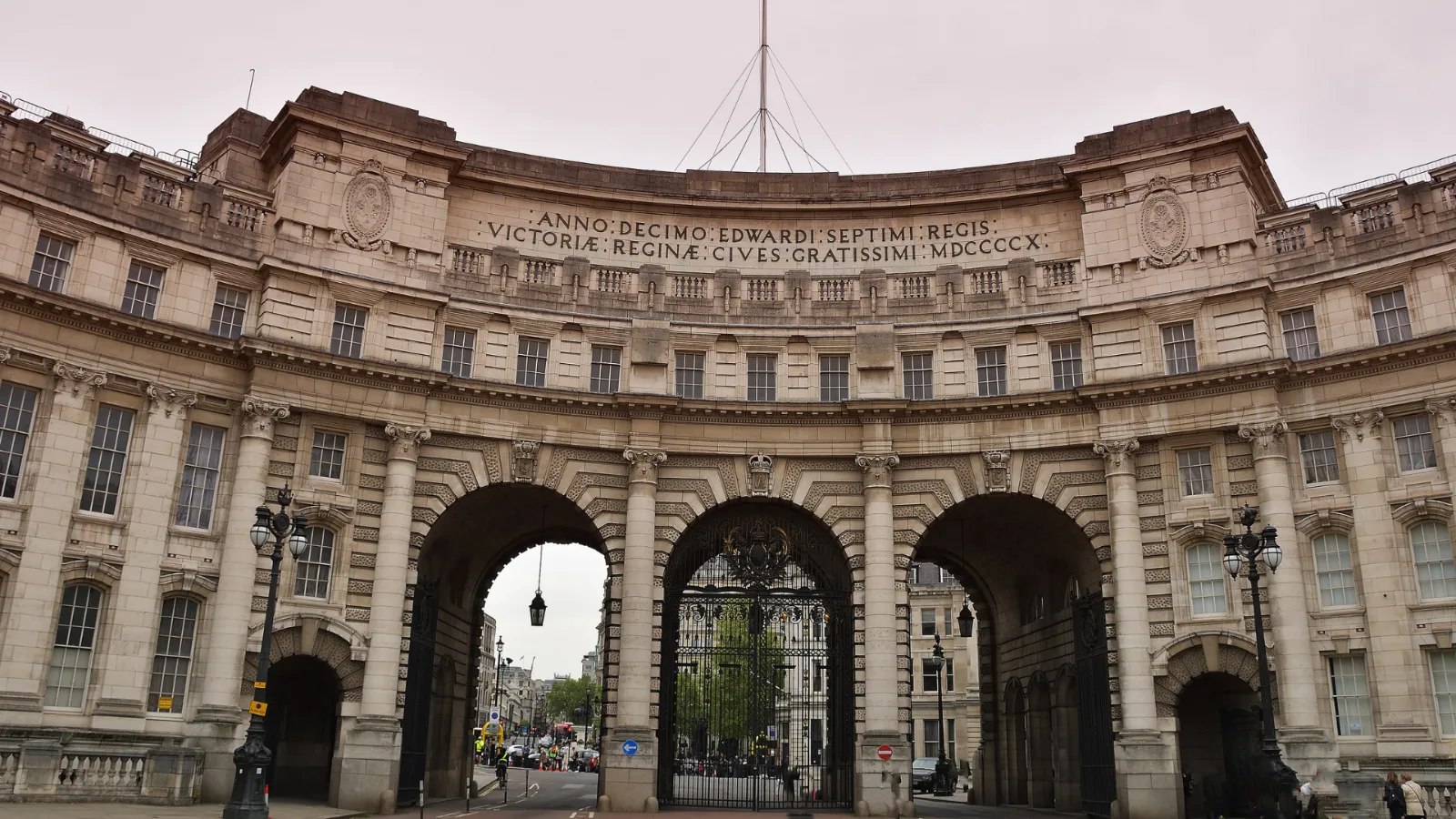
About seven feet up the inner wall of one arch, there's a cast of a human nose. Life-size. Sticking straight out of the masonry. It was part of a project by artist Rick Buckley, who affixed 35 noses like this around central London in 1997. Your guide may show you one of these noses on our Secret London Tour – it's always a moment that gets a big laugh.
Mounted soldiers riding through are said to touch it for luck, and walkers sometimes reach up to tap it. It’s easy to miss unless you know to look up. It's nicknamed the Duke of Wellington's nose, after the man whose famously large nose earned him the nickname "Old Nosey" from his troops.
At the time of writing, Admiralty Arch is being renovated, so the nose is being protected within a wooden box.
Where Exactly to Look
Standing at the statue of King Charles I, with Trafalgar Square to your right and Whitehall to your left, look directly ahead, and you'll see Admiralty Arch. The nose is inside the right-hand (northern) arch, on the inner wall, a little above head height for most adults.
Trafalgar Square Through the Year: Christmas Tree, New Year's Eve and Events
Trafalgar Square in London changes character with the calendar. Visit on a grey Tuesday in February, and you'll get space; visit in December, and you'll get carols, crowds and a giant tree.
Through the year the square also hosts free community festivals, from Chinese New Year to Diwali and St Patrick's Day, plus rallies and vigils.
The Norwegian Christmas Tree
Every year since 1947, the city of Oslo has sent London a Norway spruce as thanks for Britain's support during the Second World War, when Norway's government in exile was based here. That's why the gift keeps coming: gratitude, renewed every winter.
Visiting at Busy Times
New Year's Eve is the big one. The official fireworks along the Thames are ticketed, and roads around central Westminster are often closed for the night, so check the latest Transport for London guidance before setting out.
For a calm visit, aim for early mornings or weekday evenings outside December. Summer weekends and the Christmas run-up are the busiest periods, and big events can close parts of the square at short notice.
Getting to Trafalgar Square in London and What Else Is Nearby
Entry is free; there are no gates, and the square never closes. Is there anything to do beyond this list? Plenty, and most of it costs nothing.
Nearest Stations and Walking Routes
-
Charing Cross (Bakerloo and Northern lines, plus National Rail): exits practically onto the square.
-
Embankment (Bakerloo, Northern, District and Circle lines): about five minutes' walk up Villiers Street.
-
Leicester Square (Northern and Piccadilly lines): around five minutes south down Charing Cross Road.
-
Buses: dozens of routes stop around the square, handy for Whitehall and the Strand.
Three neighbours deserve your time. The National Gallery and the National Portrait Gallery are both free for their main collections, and St Martin-in-the-Fields, on the north-east corner, has a café in its crypt and regular concerts.
Other Famous London Squares Worth Comparing
When asked about London's most famous squares, most people name Trafalgar Square first. A few others belong in the conversation.
-
Leicester Square: five minutes north, home to big cinemas and film premieres. Brasher, busier, less history on show.
-
Parliament Square: about ten minutes down Whitehall, ringed with statues including Churchill, Mandela and Millicent Fawcett, with Westminster Abbey and Big Ben alongside.
-
Covent Garden Piazza: a short walk north-east, laid out in the 1630s by Inigo Jones, the architect who brought Italian classical design to England (he also designed Banqueting House, where Charles I was executed), as London’s first planned square. Now famous for street performers, a beautiful covered market with boutique shops, and wonderful Christmas decorations.
-
Piccadilly Circus: technically a junction rather than a square, and packed with little-known Piccadilly Circus facts.
Seeing Trafalgar Square in London with Fresh Eyes
A Walking Route Round All 11 Details
Here’s a short route that takes you past each landmark in about 15 minutes and finishes at Admiralty Arch, pointing you down The Mall towards the palace:
-
Charles I statue and the Charing Cross plaque (south side)
-
Police box (south-east corner)
-
Bronze reliefs on Nelson's Column (centre)
-
Landseer's lions (centre)
-
Lutyens' fountains (in front of the north wall)
-
Admirals' busts (north wall)
-
Imperial measurements (north terrace)
-
George Washington (outside the National Gallery)
-
George IV and the Fourth Plinth (north-east and north-west corners)
-
Pigeon-free paving (look around as you cross back south)
-
Wellington's nose (Admiralty Arch, south-west corner)
Slow down, and Trafalgar Square starts telling its stories. Every corner has one, and most of them aren’t on any sign.
For more spots like this, our roundup of hidden gems in London is a good next stop.
If you would like to see these details with a guide who can point out what the signs don't say, Secret London's walk starts right beside the Charles I statue.